
You're in a meeting when someone asks if anyone responded to the client yet. Three people say yes. Nobody knows who sent what or when.
This happens because tasks live everywhere, buried in emails, scattered across chat threads, hiding in meeting notes. Traditional to-do lists can't keep up. You write things down, but by the time you update your list, five new tasks have landed in your inbox.
AI-native task management changes this. These systems don't wait for you to tell them what needs doing. They watch your email, scan your calendar, track your conversations, and surface what matters before you even ask.
Now, the gap between teams using AI-native task management and those manually organizing everything keeps widening.
How AI is revolutionizing task management
Think about how you handled tasks five years ago. You probably maintained a running list, maybe in a notebook, maybe in a notes app. Every morning you'd review it, reorder priorities, add new items, cross off completed ones. The list never got shorter.
Modern AI-native task management systems work differently. They watch everything you do and learn what matters to you specifically.
Context awareness means these tools understand your tasks, not just track them. A director of sales gets an email about "reviewing the quarterly report." So does a junior analyst. The AI knows these create different tasks—one might need 15 minutes to scan key metrics, the other might need three hours to build it from scratch. The system adapts to your role automatically.
Intelligent prioritization learns your actual patterns. You might set due dates for everything, but you always tackle customer-facing work first. After a few weeks, the AI figures this out. When a customer email arrives, it surfaces immediately. When an internal status update lands, it waits until you have time.
Natural language recognition eliminates friction. You type "remind me about the budget proposal tomorrow afternoon" while reading an email. The AI creates a task, sets it for 2 PM (because that's when you usually do strategic work), links it to the email thread, and attaches any relevant budget documents from your drive. You didn't fill out a single form.
Schedule optimization looks at your calendar and figures out when you actually get work done. Maybe you're sharp in the morning but meetings dominate your afternoons. The AI blocks morning time for complex thinking work and pushes routine tasks to after lunch. When a meeting gets rescheduled, your entire day reorganizes automatically.
Deep integration capabilities pull tasks from everywhere. An email says "let's finalize this by Friday." A chat message mentions "we need to review the deck." A meeting note captures "Sarah will send the proposal draft." All three become tasks automatically, with proper context, without you lifting a finger.
The practical impact shows up in measurable ways. People using AI-native task management spend less time organizing and reorganizing their work.
They miss fewer deadlines because important items surface automatically before they become urgent. Teams coordinate more smoothly because everyone maintains visibility without constant status meetings.
Categories of AI task management tools
The AI-native task management landscape has matured, with tools now specializing for different workflows and organizational needs. Understanding these categories helps you find the right fit.
Email-centric AI task managers
For many professionals, email represents the primary interface where work happens. If you live in your inbox, an email-centric AI task manager can transform your most time-consuming tool into your most productive one.
Superhuman Mail
Picture this: You open your inbox Monday morning. 200 unread emails from the weekend. Normally you'd spend an hour sorting through everything, figuring out what's urgent. Not anymore.
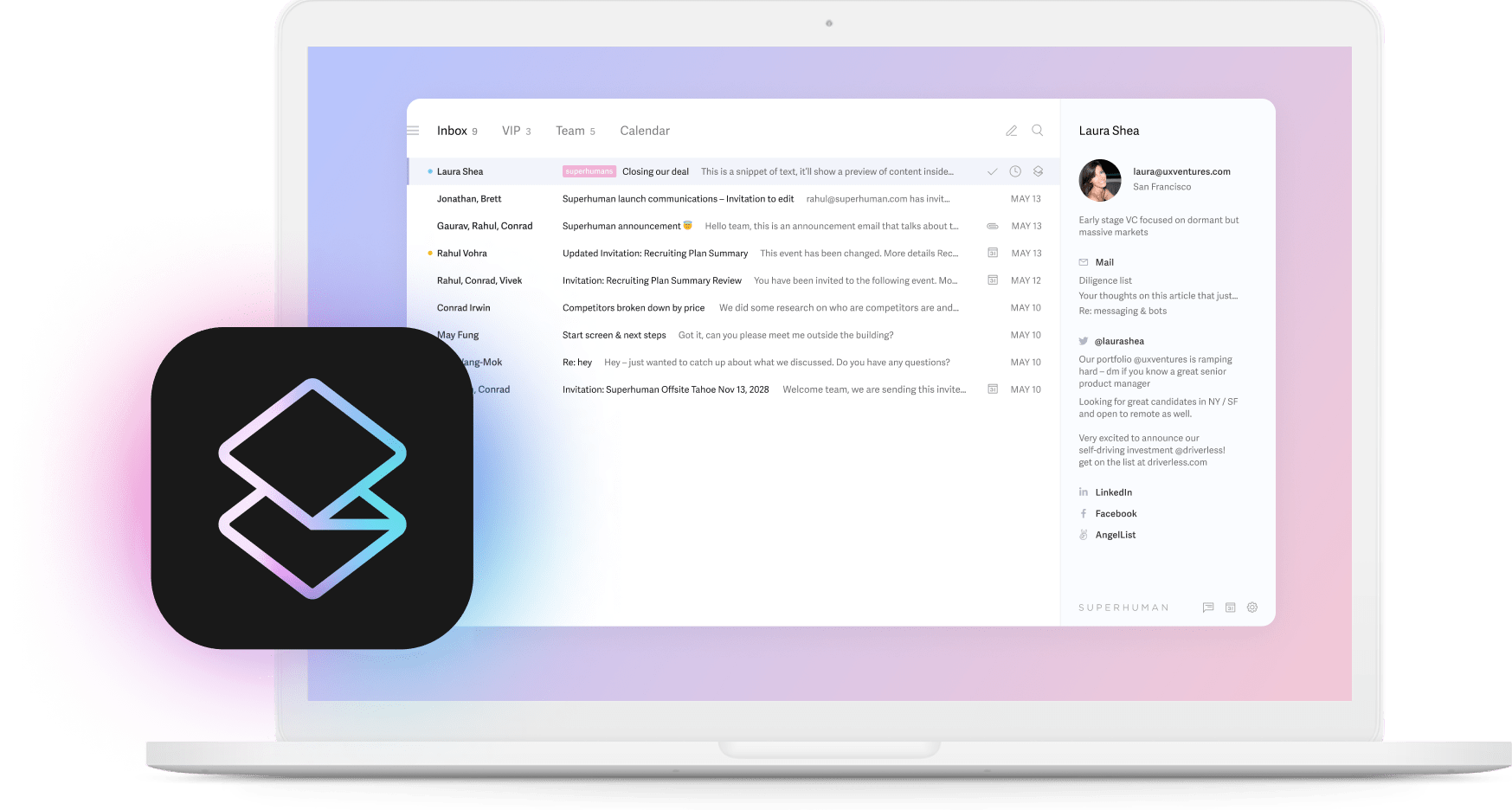
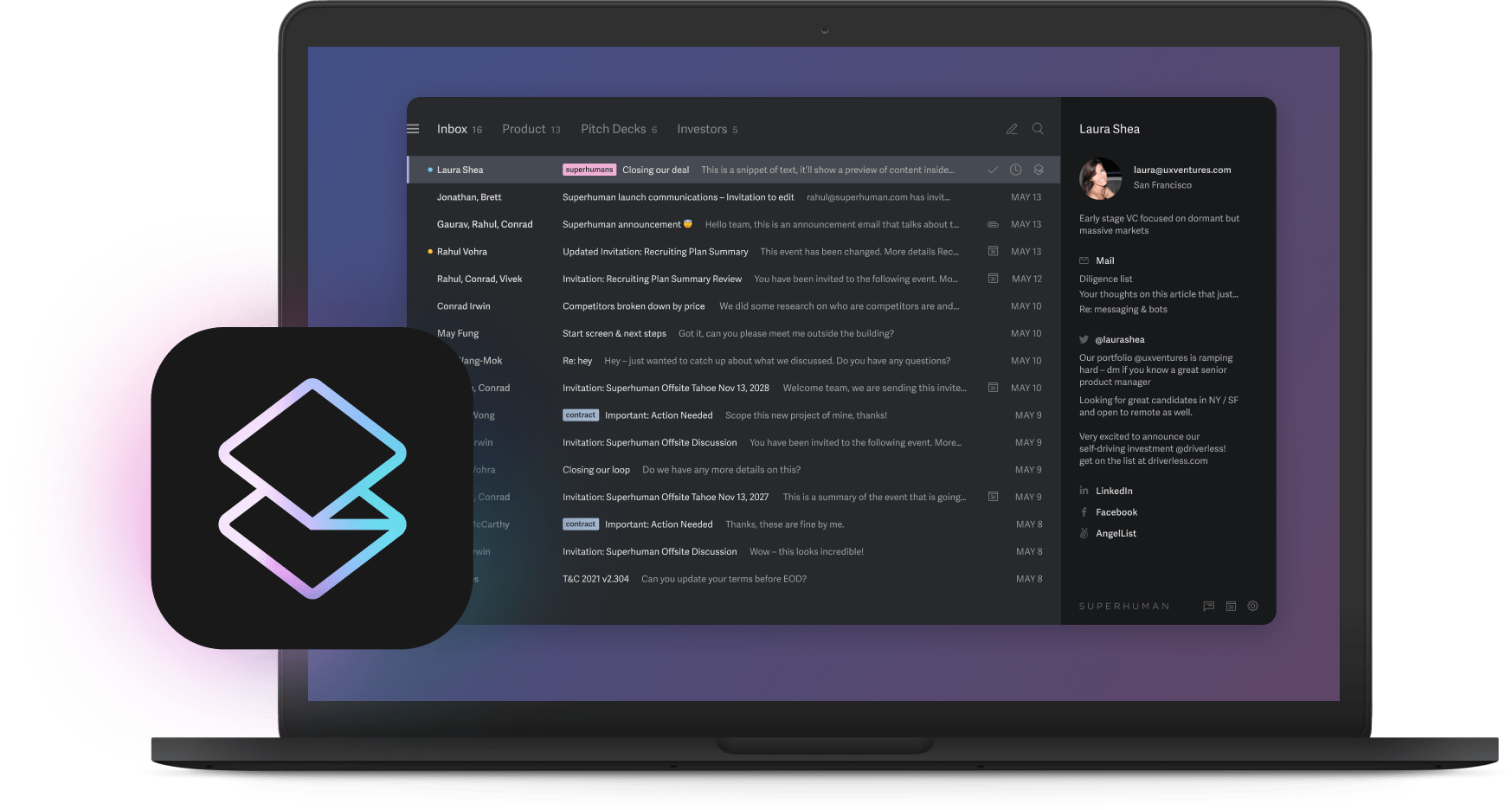
Superhuman Mail treats email as your primary task management interface. Most tasks start in your inbox anyway—why force yourself to copy them somewhere else?
The AI scans every incoming message and makes instant decisions. Client emails appear at the top of your inbox. Newsletter subscriptions disappear into a separate folder. Meeting confirmations get archived automatically after adding the event to your calendar. You see only what needs your attention.
When you're ready to respond, you don't start from scratch. Type a few words about what you want to say—"sounds good, let's schedule a call next week"—and the AI drafts a complete response matching your writing style. It studied how you write to clients versus colleagues, how you open and close messages, which phrases you use frequently. The draft sounds like you wrote it.
Need to find something from three months ago? Type "where's that pricing discussion with Sarah" and it appears instantly. No folders to remember, no exact keywords required.
The system automatically archives hundreds of emails weekly. Your inbox stops feeling like a fire you're constantly putting out and starts feeling like a tool that works for you.
Just like Grammarly learns your writing patterns to make you a better writer, or how Coda adapts to your team's way of organizing information, Superhuman Mail studies how you work and makes your most critical workflow, that is email, dramatically faster.
Best for: Professionals who process high email volumes and prefer managing tasks where they naturally occur rather than in separate systems.
Comprehensive AI project platforms
Some workflows demand more than task lists—they need full project management capabilities with visualization, team coordination, and sophisticated automation. These platforms serve as unified workspaces that scale from individual use to enterprise-wide deployment.
Coda
Coda combines documents, spreadsheets, and applications into one flexible workspace that adapts to how your team actually works. Instead of forcing you into rigid structures, Coda lets you build custom solutions that match your exact workflow.
The AI assistant helps you write, analyze data, and automate repetitive tasks directly within your docs. It can summarize meeting notes, generate project updates, and answer questions about information scattered across your workspace. Coda's building blocks (tables, views, buttons, and automations) snap together to create everything from simple task trackers to complex project management systems.
Best for: Teams who want maximum flexibility to design custom workflows and keep documentation, tasks, and data in one connected workspace.
Asana
Asana combines powerful project planning capabilities with AI features that help teams work smarter. The platform excels at visualizing complex projects, tracking dependencies between tasks, and providing clear visibility into who's doing what.
The AI components focus on team capacity management and predictive analytics. The system monitors workload across team members and flags when someone has too much on their plate, helping prevent burnout before it happens. Predictive features analyze current progress to forecast realistic completion dates, catching potential delays early enough to course-correct.
Best for: Medium to large organizations managing complex projects with multiple stakeholders and dependencies.
ClickUp
ClickUp's strength lies in extreme customization combined with strong AI automation. The platform adapts to virtually any workflow rather than forcing teams into predetermined structures.
The AI workflow designer learns from how your team handles tasks and suggests automation rules to eliminate repetitive work. It helps draft task descriptions, summarizes meeting notes, and converts chat conversations into actionable tasks so good ideas don't disappear into message history.
Best for: Teams with established workflows who want to optimize and automate their existing processes rather than completely changing how they work.
Notion AI
Notion approaches task management as part of a larger knowledge management system. Tasks live alongside the documentation, research, and resources that give them context, creating a unified workspace for thought work.
The AI components help organize information, automatically link related tasks and documents, and surface relevant resources when working on specific projects. It standardizes how team members write task descriptions while creating visual maps showing connections between different project elements.
Best for: Knowledge workers and teams whose tasks connect closely with documentation, research, and substantial background information.
Wrike
Wrike specializes in enterprise-grade project management with comprehensive security and compliance features. The platform balances sophisticated workflow automation with the strict access controls and audit trails that large organizations and regulated industries require.
Real-time analytics provide visibility across projects and departments while maintaining granular permission settings. The AI suggests process improvements based on historical project data while preserving detailed documentation for compliance purposes.
Best for: Large enterprises with strict security requirements and complex approval workflows.
Scheduling-first AI tools
Some professionals think in terms of calendar blocks rather than task lists. These tools treat your schedule as the primary organizing principle, automatically placing tasks in optimal time slots.
Motion
Motion combines task management with intelligent calendar automation. The system analyzes your tasks, deadlines, and calendar to create optimized daily schedules automatically.
When meetings get rescheduled or new tasks arrive, Motion instantly reorganizes your day to accommodate changes while protecting focused work time. The AI learns which types of work you're most productive doing at specific times and schedules accordingly.
Best for: Teams that need adaptive scheduling across multiple people and projects.
Morgen
Morgen focuses on individual productivity through unified calendar and task management. The platform consolidates all your calendars into one view while providing AI assistance for scheduling and task prioritization.
Natural language input makes adding tasks and events effortless. The AI suggests optimal times for focused work based on your energy patterns and existing commitments.
Best for: Individual professionals who want calendar-centric task management with cross-platform calendar integration.
Akiflow
Akiflow specializes in time-blocking for busy professionals. The system integrates with your existing tools and helps you plan realistic daily schedules that account for actual capacity.
The AI analyzes historical data to improve scheduling suggestions over time, learning which estimates prove accurate and which consistently run over.
Best for: Solo professionals and small teams who prefer structured time-blocking approaches.
Visual and collaborative tools
Some teams think visually. Board-based and mind-mapping tools with AI capabilities provide spatial organization that matches how these teams naturally work.
Trello with AI Butler
Trello's board-based approach combined with AI Butler automation creates a visual task management system that reduces manual work.
The AI suggests automation rules based on how you use boards, automatically moves cards between lists based on status changes, and flags potential bottlenecks in workflows.
Best for: Teams comfortable with Kanban-style workflows who want visual organization with intelligent automation.
Taskade
Taskade combines mind mapping, outlines, and traditional task lists with AI assistance. The platform adapts to how you want to visualize work rather than forcing a single approach.
The AI helps generate project outlines, suggest task breakdowns, and convert freeform notes into structured action items.
Best for: Creative teams and individuals who prefer flexible, visual organization methods.
Monday.com
Monday.com provides highly customizable workflows with extensive automation capabilities. The platform's visual interface makes complex projects understandable while AI handles routine coordination.
Workflow automation eliminates repetitive updates and status checks while predictive analytics help forecast project timelines and resource needs.
Best for: Teams with diverse project types requiring flexible, visual workflow management.
Choosing the right tool for your needs
Your workflow determines which tool fits best. Consider these factors when evaluating options.
Email volume matters. If you process hundreds of emails daily, an email-centric solution like Superhuman Mail delivers immediate value by managing tasks where they originate. For teams where email isn't the primary workflow, comprehensive project platforms or scheduling-first tools might serve better.
Team size influences choice. Solo professionals benefit from streamlined tools like Morgen or Akiflow that eliminate coordination overhead. Small teams (5-20 people) often thrive with Motion or ClickUp. Large organizations typically need enterprise platforms like Wrike or Asana with robust permission systems and audit trails.
Integration requirements are critical. Catalog which tools your team uses daily. The right task management system should connect seamlessly with your email, calendar, document storage, and communication platforms. Poor integration creates friction that undermines adoption.
Match complexity to reality. More features aren't always better. Some teams need highly customizable systems with complex workflow rules while others prefer solutions that work excellently out of the box with minimal configuration. Consider your team's technical sophistication and patience for setup work.
Evaluate pricing realistically. Look beyond initial costs to understand how pricing scales as your usage grows. Some tools charge per user, others by features, and some have usage limits. Calculate the actual cost at your expected scale rather than being swayed by low entry prices that balloon later.
Here's a quick reference for matching your primary need with tool categories:
Getting started with AI task management
Your first week won't feel magical. The AI needs time to learn your patterns before it becomes genuinely helpful.
Start with your biggest pain point. If email buries you every morning, begin with Superhuman Mail. If your team constantly asks "who's working on what," try Motion. Pick the one thing that wastes the most time and fix that first. Once it works, expand from there.
Give the AI time to learn. A designer at a tech company tried Motion and almost quit after three days. The schedule suggestions felt random. Her team convinced her to stick with it for two more weeks. By week three, Motion figured out she did her best creative work before lunch and handled administrative tasks in the afternoon. Now she won't work without it.
The learning period is normal. Initial recommendations often miss the mark. The system needs to see how you actually work, not how you say you work. Most tools take three to four weeks before their suggestions feel consistently useful.
Build trust gradually. Start by letting AI handle routine decisions—what to archive, when to schedule status checks, which emails can wait. Keep tight control of critical items until you verify the system understands what "critical" means to you. As accuracy improves, let it manage progressively more important work.
Measure what matters. Forget counting completed tasks. Instead, track: Are you missing fewer deadlines? Ending work on time more often? Feeling less overwhelmed? Those outcomes matter more than any productivity metric.
Help your team adopt it right. Find someone who gets both the technology and how your teams work. Let them customize things for different departments, troubleshoot issues early, and help skeptics see the value. One company rolled out Asana to 200 people in a single day. Half the team never used it. Another company started with five champions, got them successful, then expanded gradually. Within three months, everyone asked for access.
For most professionals, email remains the biggest source of task overload. Your inbox is where assignments land, deadlines get set, and follow-ups pile up. That's why starting with an email-first approach often delivers the fastest results. Superhuman Mail helps you save 4 hours per person every week by turning your inbox into a task management system that actually works.