What's the best app to clean up email? let's find out

We cover the 10 best apps to clean up your email inbox in 2025. Compare top email cleanup tools, including Superhuman Mail, SaneBox, and Clean Email.

It was 8:47 PM on a Tuesday when I realized I'd missed my daughter's school play. Not because I forgot. Because I was buried in email, convinced I was almost done.
If you've ever felt that sinking feeling of an overflowing inbox stealing time from what matters, you're not alone. According to McKinsey research, professionals spend approximately 28% of their workday managing email. For a 50-hour work week, that's 14 hours lost to your inbox every single week.
The right email cleanup app can reclaim those hours. After testing dozens of tools, we've identified the best options. Some replace your email client entirely, others work quietly in the background, and a few focus on helping you escape newsletter overload.
What is an email cleanup app?
An email cleanup app is software designed to help users organize, prioritize, and manage their email inbox more efficiently. These tools go beyond the basic sorting and filtering capabilities built into standard email clients like Gmail and Outlook.
Email cleanup apps typically offer features such as:
- Automatic categorization and labeling: Sorting incoming messages by sender, topic, or importance
- Bulk unsubscribe tools: Removing yourself from mailing lists and newsletters
- Smart prioritization: Surfacing important messages while filtering out noise
- AI-powered assistance: Drafting replies, summarizing threads, and automating routine responses
- Scheduled send and reminders: Timing emails for optimal delivery and follow-up
The best email cleanup apps integrate seamlessly with existing email providers (Gmail, Outlook, iCloud) and work across multiple platforms. They aim to reduce the cognitive load of email management, helping users achieve "Inbox Zero" and maintain it consistently.
Quick comparison: 10 top email cleanup apps
The 10 best email cleanup apps in 2025
1. Superhuman Mail: Best overall for power users and teams
After that missed school play, Superhuman Mail became my primary email client. For professionals drowning in email, it delivers the most comprehensive solution available today.
Key Features:
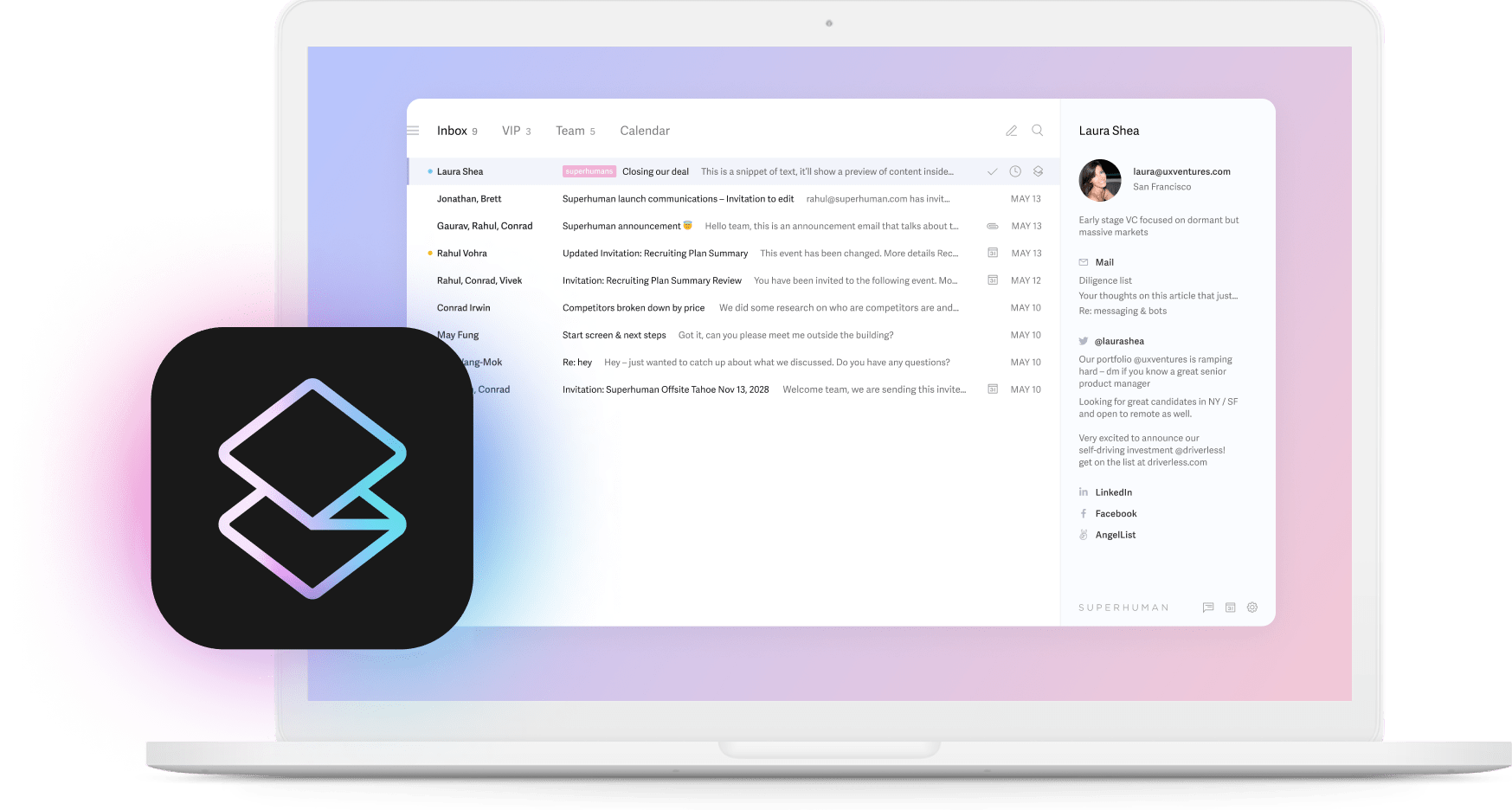
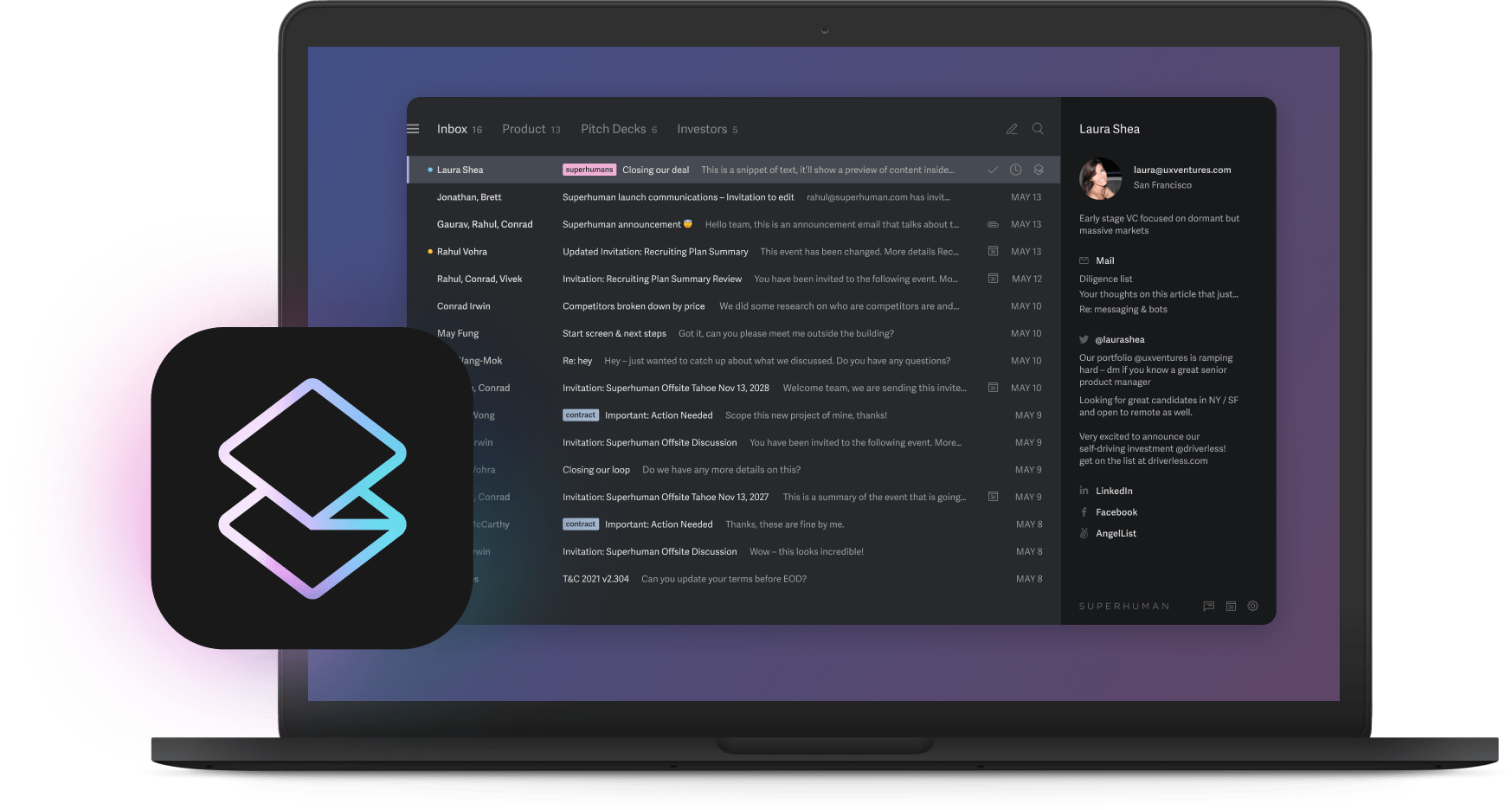
- Split Inbox: Automatically separates emails into streams. VIP contacts, team messages, newsletters, and notifications each get their own lane. No more hunting for the email that matters.
- AI Writing Assistance: Write full emails from brief phrases. Type "meeting thursday 2pm confirm" and the AI expands it into a polished, professional message matching your personal tone.
- Auto Archive: Low-priority emails (cold pitches, automated notifications, marketing) automatically move out of your inbox. You can still access them, but they no longer demand attention.
- Instant Reply: AI-generated draft responses appear alongside each email. One click sends a contextually appropriate reply, saving minutes per message.
- Auto Reminders: Set follow-up reminders that surface emails at exactly the right time. Never let an important thread slip through the cracks.
- Keyboard-First Design: Power users can process their entire inbox without touching a mouse. Commands like Cmd+K provide instant access to any action.
Team Features:
For sales and marketing teams, Superhuman Mail offers shared read statuses (know when prospects open your emails), team comments on threads, and shared snippets for consistent messaging. The real-time collaboration features eliminate the need to forward emails or CC colleagues unnecessarily.
When a sales rep needs input on a deal, they can tag a colleague directly in the email thread. When a customer success manager spots a renewal risk, they can loop in their manager without the customer ever knowing. These small efficiencies compound across an organization.
Pros:
- Fastest email experience available
- AI features genuinely save hours, not minutes
- Beautiful, distraction-free interface
- Excellent team collaboration features
- Works with Gmail and Outlook
Cons:
- Pricier than less robust options
- Small learning curve for keyboard shortcuts (though optional)
2. SaneBox: Best for background filtering
SaneBox takes a different approach: instead of replacing your email client, it works behind the scenes with whatever you already use. It analyzes your email behavior and automatically sorts incoming messages into folders.
The filtering happens at the server level. SaneBox connects to your email account and creates special folders that filter messages before they ever reach your inbox. After a few days of training (you move misclassified emails to the correct folders), it learns what matters to you.
Key Features:
- SaneLater: Non-urgent emails land here instead of your inbox
- SaneBlackHole: Drag emails here to never hear from that sender again
- SaneReminders: Emails resurface if recipients don't respond
- SaneNoReplies: Track sent emails that haven't received responses
- Daily Digest: Summary of filtered emails so nothing important gets missed
Pros:
- Works with any email client
- Set-it-and-forget-it automation
Cons:
- No email composition features
- Can occasionally misfile important emails
- Limited customization on lower tiers
3. Clean Email: Best for one-time inbox deep clean
If your inbox has thousands of unread messages and you need to start fresh, Clean Email is the tool for the job. Its Smart Views group similar emails together, letting you archive, delete, or unsubscribe from hundreds of messages in seconds.
The interface presents your inbox as manageable chunks rather than an overwhelming list. You might see "1,847 emails from LinkedIn" or "923 emails older than 2 years" and handle them all with a single click. For anyone who has let their inbox spiral out of control, this approach is effective.
Key Features:
- Smart Views: Automatically groups emails by type (social notifications, financial, shopping, travel, etc.)
- Auto Clean: Create rules to automatically handle incoming emails
- Unsubscriber: Bulk unsubscribe from mailing lists
- Privacy Guard: Blocks email tracking pixels
- Quick Clean: One-click actions for common cleanup tasks
Pros:
- Excellent for tackling inbox backlog
- Visual interface makes bulk actions easy
- Strong privacy features
- Supports Gmail, Outlook, Yahoo, iCloud
Cons:
- Not a daily email client replacement
- Better for periodic cleanup than ongoing management
- No AI composition features
4. Mailstrom: Best for mass deletion
Mailstrom excels at helping you understand and clean up years of accumulated email. Its visualization tools show exactly where your inbox clutter comes from, making it easy to delete thousands of old messages quickly.
Key Features:
- Inbox Analytics: Visual breakdown of email sources and volume
- Bulk Actions: Archive, delete, or move thousands of emails at once
- Time-Based Sorting: Find and remove old emails by date range
- Sender Blocking: Block future emails from specific senders
Pros:
- Excellent visualization of inbox clutter
- Powerful bulk deletion capabilities
- Works with Gmail, Outlook, Yahoo, iCloud
Cons:
- Web-only interface
- Better for cleanup than daily management
- No mobile app
5. Unroll.me: Best free option for newsletter management
Unroll.me is a popular tool for managing newsletter subscriptions. It scans your inbox, identifies all subscription emails, and lets you unsubscribe with one click. The "Rollup" feature combines remaining newsletters into a single daily digest.
Key Features:
- Subscription Discovery: Automatically finds all your mailing list subscriptions
- One-Click Unsubscribe: Remove yourself from lists instantly
- Rollup Digest: Combine newsletters into one daily email
Pros:
- Free to use
- Simple, focused functionality
- Mobile apps available
Cons:
- Privacy concerns (monetizes through data aggregation)
- Limited to subscription management
- Not effective for all mailing lists
6. Spark Mail: Best free alternative with team features
Spark Mail offers a solid free tier with smart inbox features and team collaboration tools. It's particularly popular among Apple ecosystem users, though it now supports Windows as well.
Key Features:
- Smart Inbox: Automatically prioritizes important emails
- Team Email: Collaborate on emails, assign threads, share drafts
- Send Later: Schedule emails for optimal delivery
- Email Templates: Save and reuse common responses
Pros:
- Generous free tier
- Good team collaboration features
- Cross-platform support
- Supports multiple email providers
Cons:
- Privacy concerns with data handling
- Premium features require subscription
- AI features less advanced than competitors
7. Edison Mail: Best for budget-conscious users
Edison Mail provides a free, full-featured email client with smart organization features. It's particularly strong on mobile devices and includes an AI assistant for basic email composition.
Key Features:
- Assistant: AI-powered email composition and response suggestions
- Focused Inbox: Separates important emails from noise
- One-Tap Unsubscribe: Easy newsletter management
- Package Tracking: Automatic tracking of shipments from emails
Pros:
- Completely free
- Supports all major email providers
- Clean, intuitive interface
- Useful assistant features
Cons:
- Monetizes through anonymized data
- Less powerful than premium alternatives
- No team features
8. Leave Me Alone: Best for privacy-conscious users
Leave Me Alone offers a privacy-first approach to subscription management. Unlike free alternatives, it doesn't sell your data, and its pay-per-use model means you only pay for what you clean up.
Key Features:
- Subscription Scanner: Finds all mailing lists you're subscribed to
- Unsubscribe Credits: Pay only for unsubscribes you use
- Rollup Feature: Combine newsletters into digest
- Privacy-First: No data selling or sharing
Pros:
- Strong privacy commitment
- Flexible pay-per-use model
- Transparent about data handling
Cons:
- Web-only interface
- Limited to subscription management
- Costs add up for heavy users
9. Front: Best for customer-facing teams
Front turns email into a collaborative workspace for teams that manage high volumes of customer communication. It's particularly powerful for sales, support, and success teams.
Key Features:
- Shared Inbox: Team members collaborate on the same messages
- Internal Comments: Discuss emails without forwarding
- Assignment Rules: Route emails automatically to the right team member
- Analytics: Track response times and team performance
Pros:
- Excellent team collaboration
- Strong analytics and reporting
- CRM integrations
Cons:
- Expensive for small teams
- Overkill for personal use
- Learning curve for setup
10. Hiver: Best for Gmail-native team collaboration
Hiver turns Gmail into a full-featured help desk without requiring users to leave their familiar interface. It's ideal for teams that want collaboration features without adopting an entirely new platform.
Key Features:
- Shared Inboxes: Manage team emails like support@ or sales@
- Email Assignment: Assign emails to specific team members
- Collision Alerts: Prevent duplicate responses
- Email Notes: Add context visible only to team
Pros:
- Works within Gmail interface
- No training required for Gmail users
- Strong collaboration features
Cons:
- Gmail only
- Chrome extension required
- Can slow down Gmail
What about Gmail and Outlook's built-in features?
Before investing in a third-party app, it's worth understanding what your existing email client already offers.
Gmail's built-in tools:
- Priority Inbox: Automatically separates important emails from everything else
- Categories: Sorts emails into Primary, Social, Promotions, Updates, and Forums tabs
- Filters: Create rules to automatically label, archive, or delete specific emails
- Snooze: Temporarily hide emails and have them reappear later
- Smart Compose: AI-assisted writing suggestions as you type
Outlook's built-in tools:
- Focused Inbox: Separates important emails from "Other"
- Rules: Automate email sorting based on sender, subject, or keywords
- Sweep: Bulk delete or move emails from specific senders
- Schedule Send: Time your emails for optimal delivery
These features handle basic organization, but they have significant limitations. They lack the intelligence to learn your preferences over time, don't offer AI-powered responses, and provide minimal team collaboration capabilities. For professionals receiving 100+ emails daily, built-in features simply can't keep pace.
Third-party apps like Superhuman Mail fill these gaps by offering smarter prioritization, faster interfaces, and features that Gmail and Outlook don't provide at any price tier.
How to choose the right email cleanup app
With so many options available, choosing the right tool depends on your specific situation:
Consider your primary goal:
- Daily email efficiency: Look for AI-powered prioritization and smart inbox organization that surfaces important messages automatically
- One-time inbox cleanup: Tools like Clean Email can help clear backlogs before you transition to a daily driver
- Newsletter management: Dedicated unsubscribe tools work well, though platforms with Auto Archive features can handle this automatically
- Background filtering: Some tools work alongside your existing client, while others replace it entirely with smarter filtering
- Team collaboration: Shared conversations and team comments help teams collaborate without endless forwards
Consider your workflow:
- Individual professional: Prioritize speed and AI writing assistance
- Small team: Look for shared snippets, team comments, and visibility into important threads
- Customer-facing team: Read receipts and instant reply features help manage high-volume external communication
- Budget-conscious: Free tools can help with basic organization, though they typically lack AI capabilities
Consider your email volume:
If you receive fewer than 50 emails per day, a free tool may suffice for basic organization. At 50-150 emails daily, AI-powered features start delivering meaningful time savings. Beyond 150 emails per day, a comprehensive solution with smart prioritization becomes essential for maintaining productivity.
The future of email: AI-powered inbox management
Email cleanup tools are evolving rapidly. The next generation of AI features will transform how we interact with our inboxes:
- Predictive prioritization: AI will learn your communication patterns and surface emails at the moment you're most likely to need them.
- Contextual responses: Draft replies will incorporate information from your calendar, CRM, and documents automatically.
- Proactive follow-up: AI will identify stalled conversations and suggest when and how to re-engage.
- Cross-platform intelligence: Email apps will connect with Slack, project management tools, and calendars for unified communication management.
Tools like Superhuman Mail are already pioneering many of these features, making them available today rather than years from now.
Take back your inbox
That Tuesday night when I missed my daughter's play was a turning point. Email had become the boss of my schedule, dictating when I worked and stealing time from what mattered most.
Today, my relationship with email is completely different. I process my inbox in minutes, not hours. I respond faster to the messages that matter and let AI handle the routine stuff. Most importantly, I'm present for the moments that count.
The right email cleanup app can do the same for you. Whether you choose a comprehensive solution like Superhuman Mail or start with a free tool to test the waters, the key is taking action. Your inbox is not going to organize itself.
Test the tools that match your workflow. And reclaim the hours that email has been stealing from your life. Sign up for Superhuman Mail today and join thousands of professionals who have transformed their inbox.