
Key takeaways
- An email to task workflow processes messages systematically, turning your inbox into a processing queue rather than a storage system
- The 2-minute rule prevents task list overwhelm: if an email takes less than 2 minutes, handle it immediately without creating a task
- Email-centric workflows using Superhuman Mail eliminate context switching by keeping reminders, snoozing, and scheduling within your inbox
- The GTD framework provides a decision tree for every email: do it, delegate it, defer it, archive it, or delete it
- Keyboard shortcuts and AI-native tools can save executives over 4 hours per week on email management
28% of your workweek goes to managing email. For a standard 40-hour week, that's over 11 hours. An effective email to task workflow reclaims that time by processing messages systematically instead of letting them pile up. You have two options: convert emails into separate task systems, or use email-centric workflow management that keeps everything in your inbox.
But by the time you finish processing, important items are buried, mixed with newsletters and meeting confirmations. You know you'll forget to follow up on at least two of them. Sound familiar? The solution starts with understanding what an email to task workflow actually is and how it transforms the way you process messages.
Understanding email to task workflow
An email to task workflow is a systematic approach to processing incoming messages and converting them into actionable items. Rather than treating your inbox as a storage system where emails pile up indefinitely, this methodology ensures every message gets processed once and moved to its appropriate destination, whether that's a task manager, your calendar, or the archive.
Knowledge workers receive 117 emails per day on average. Some need immediate responses. Others deserve thoughtful replies you don't have time for right now. Several are tasks disguised as emails. A few need delegation. The rest need assessment before you can act. Without a clear email-to-task system, you end up scanning your inbox repeatedly, trying to remember what needs doing.
Why converting emails to tasks matters for leaders
53% of knowledge workers say email is their worst time sink at work, second only to meetings. But the real damage goes deeper.
Context switching destroys productivity, and you lose five working weeks per year this way. That's 200 hours of your life, gone. You know the feeling: checking email, then jumping to your calendar, then back to email, then over to your task list. Important items fall through the cracks. When everything lives in your inbox, nothing has true priority. The urgent email from this morning is buried by mid-afternoon. You forget to follow up on the deal that needs closing.
You can't scale your impact when managing heavy inbox traffic daily leaves no time for the high-value work that moves your business forward. The paradox: 60% of workers say time is the biggest barrier to implementing a better way to manage email. You lack the time to set up the solution that would save you time.
Two approaches to managing email tasks
Stop using your inbox like a to-do list. When an email needs action, handle it once, then get it out of your inbox. Think about how you handle email now: messages sit as reminders, you leave them unread to signal "this needs action," you star important items, flag urgent ones, and somehow expect to remember what each email represents three days from now.
The traditional approach converts emails into separate task management systems. You process an email, create a task in your project manager, and then archive the email. Your task system tracks commitments while your inbox handles only new messages.
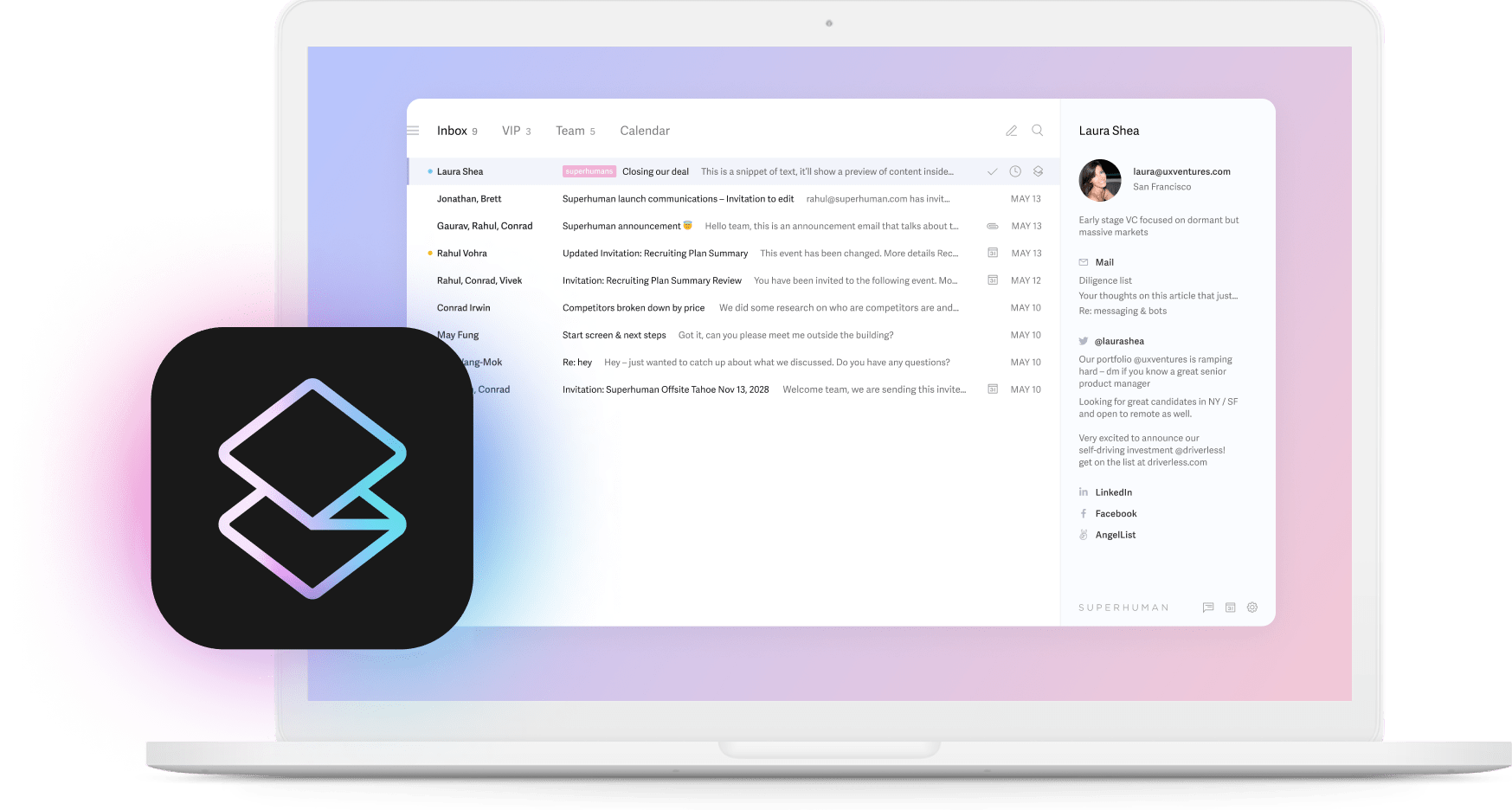
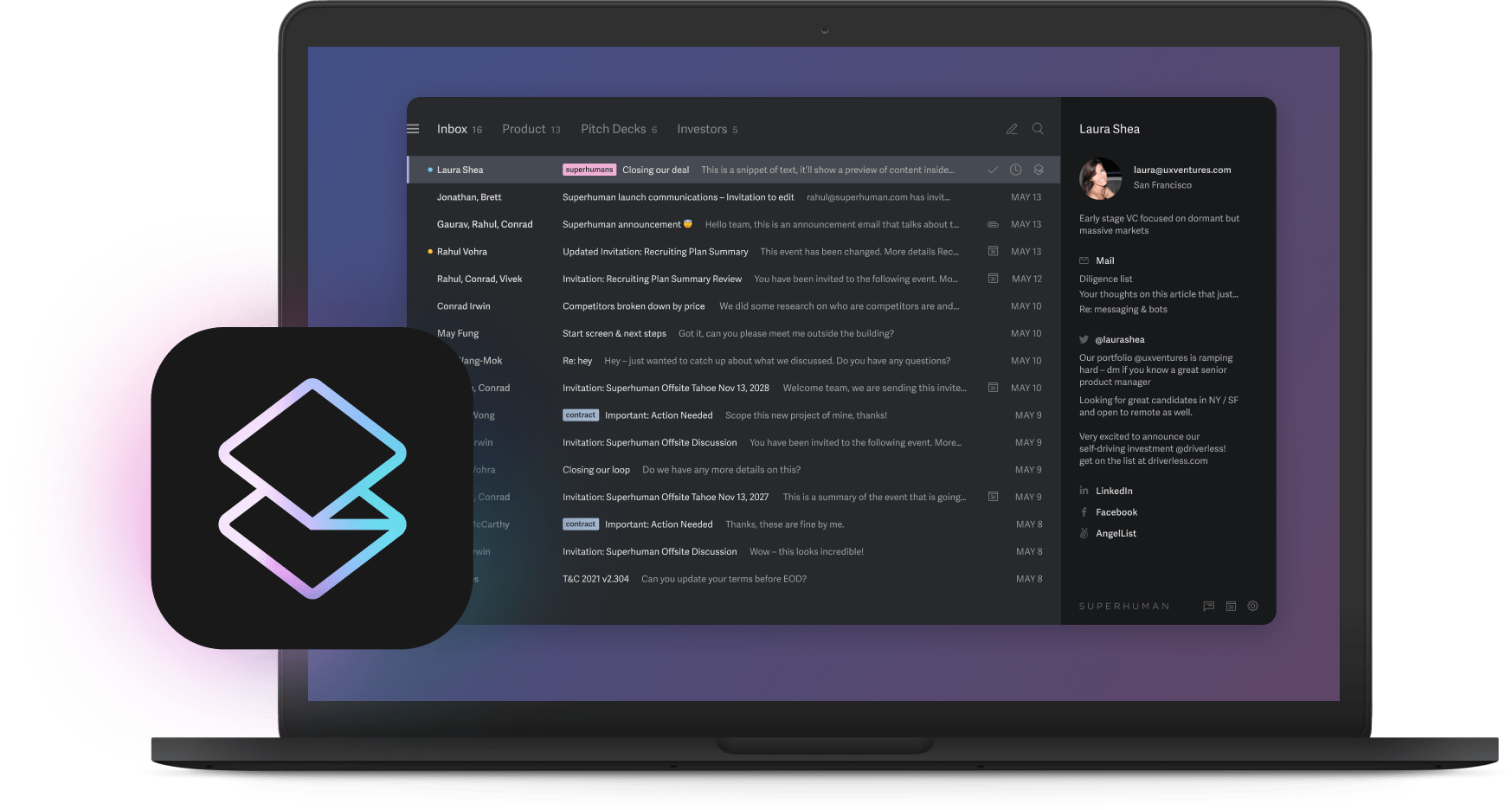
The alternative keeps everything in email. Instead of converting emails to external tasks, email-centric workflow management uses features like follow-up reminders, snoozing, and keyboard-driven processing to transform your inbox itself into a workflow system. This is what Superhuman Mail does. For busy executives, it eliminates context switching entirely. Your workflow tracks commitments and deadlines, while your inbox just handles incoming messages.
How email-centric tools streamline task workflows
Email-centric workflow tools like Superhuman Mail take a different approach than traditional task managers. Instead of converting emails to separate task systems, they transform your inbox itself into a workflow management system using follow-up reminders, snoozing, and keyboard shortcuts. You stay in your email environment rather than jumping between applications.
The core features that make this work include automatic follow-up tracking, where the system reminds you when someone hasn't responded to an important email. You set a reminder time when sending, and if they don't respond by then, the email resurfaces precisely when you need to follow up. This eliminates the mental overhead of tracking open conversations manually.
Snooze functionality enables time-based inbox management. You can clear emails from your inbox temporarily, and they return exactly when you need them. This helps you address emails at the right time without cluttering your current view or losing track of important items.
Keyboard shortcuts accelerate processing significantly, and let you hit Inbox Zero without reaching for your mouse. Single keystrokes handle archiving, snoozing, replying, and forwarding. AI capabilities handle follow-up reminders, snoozing, and scheduling natively rather than requiring you to convert emails into separate task objects.
Features like Send Later let you compose emails immediately but deliver them at optimal times, separating your productive writing time from recipient availability.
This approach works best when you have clear frameworks for deciding what each email needs, which is where the GTD methodology becomes essential.
The GTD framework for email-to-task conversion
The GTD (Getting Things Done) framework gives you a decision tree for every email. It's the most comprehensive framework for turning emails into actionable tasks.
The framework works through five steps: Capture everything in your inbox without immediate action. Clarify what each email means and requires. Organize items into appropriate categories. Reflect regularly to ensure nothing falls through the cracks. Engage by executing based on context and priority.
The clarify step is where you turn emails into tasks. For each message, ask yourself: Does this need action? If yes, what specifically needs doing? This is where the 2-minute rule comes in. Can you knock it out in 2 minutes or less? Do it now. Don't create a task, just handle it. This prevents your task list from becoming an overwhelming pile of tiny items.
For each email, ask yourself these questions:
- Can you handle it in 2 minutes? Do it now. Don't create a task.
- Can someone else handle it? Delegate it. Forward the email and archive it. Track the delegation in your system, not your inbox.
- Does it need your attention later? Defer it with a clear next action and deadline. Then archive the email. Your workflow handles the reminder, not your inbox.
- Is this just reference material? Archive it. Your email client's search function will find it when needed.
- Is this unnecessary? Delete it.
This decision tree eliminates ambiguity. Every email has exactly one outcome, and you process it once. These decision criteria become automatic when you process emails with keyboard shortcuts at speed.
Practical implementation with keyboard shortcuts
Decision frameworks mean nothing if they're slow. You need shortcuts that work at speed. Before Superhuman Mail, Gmail power users relied on shortcuts like e to archive and b to snooze. Outlook users memorized CTRL+SHIFT+9 for archiving. These workflows required manual setup and lacked intelligent follow-up tracking.
Superhuman Mail automates these patterns with AI-native reminders and shortcut-driven processing that's purpose-built for handling email at scale. Check email at specific times and stay out of your inbox otherwise to protect your focus time. During processing sessions, handle similar email types together to reduce context switching and enable rapid triage using shortcuts.
Common mistakes that break task workflows
The biggest mistake? Context switching. Every time you switch from email to your task system and back, you lose focus. The solution is choosing systems that eliminate switching entirely. Superhuman Mail's email-centric approach keeps everything in your inbox. Follow-up reminders, snoozing, and scheduling work where you're already working. Use keyboard shortcuts that don't require leaving your email interface.
Other ways people break their email-to-task workflow:
- Don't turn every email into a task. Use the 2-minute rule consistently. If an email takes less than 2 minutes to address, handle it immediately without task creation. This prevents your task list from becoming an overwhelming backlog of trivial items.
- Don't leave emails in your inbox as reminders. After identifying an email that requires action, defer it with specific deadlines and next steps. Then archive or delete the email.
- Don't process email continuously. Constant inbox monitoring disrupts deep work and fragments your focus. Set up scheduled sessions 2-3 times daily at consistent times to enable sustained focus on strategic work between sessions.
- Don't skip prioritization when converting to tasks. Without prioritization, you create undifferentiated backlogs where everything appears equally urgent. Apply a priority matrix: urgent and important items become immediate actions, important but not urgent items get scheduled with specific deadlines, and urgent but not important items get delegated or handled quickly without task creation.
How Superhuman Mail's AI accelerates task workflows
Desk-based workers using GenAI tools save 4.11 hours weekly, representing about 10% of a standard 40-hour work week. For leaders managing heavy inbox traffic, AI-driven email management delivers these gains by eliminating manual triage and tracking.
AI tools in platforms like Microsoft 365 Copilot can help extract action items from emails and provide chat-assisted scheduling support, but they require user confirmation for each action and don't automatically categorize incoming messages. Superhuman Mail's AI takes a different approach: it focuses on organizing your inbox and ensuring follow-up reminders work seamlessly in the background.
When you send an email, reminder features activate automatically rather than requiring you to choose a reminder time. The AI works constantly beside you, handling email volume without pulling you out of your workflow.
Transform your email to task workflow today
Email-to-task workflows reclaim those 11 hours you're currently losing every week to inbox management. For busy executives, Superhuman Mail is the most productive email app ever made. Its shortcut-driven processing and automatic follow-up tracking eliminate the context switching that fragments executive focus.
Start with clear decision criteria using the GTD framework for every email. Apply the 2-minute rule consistently. Delegate what you can. Defer actionable items with clear next actions, then archive. Set up keyboard shortcuts for rapid processing and process email in scheduled batches rather than continuously. Archive aggressively and rely on search for retrieval.
Your inbox doesn't have to control your day. Fly through your inbox with Superhuman Mail and make email feel good again.
FAQs
How do I turn an email into a task?
To turn an email into a task, first decide if it requires action. If yes, either handle it immediately using the 2-minute rule, delegate it to someone else, or create a task with a specific next action and deadline. Once you've processed the email, archive it so your inbox stays clean. Tools like Superhuman Mail let you set follow-up reminders directly within your email, eliminating the need to transfer tasks to a separate system.
What is the best email to task workflow method?
The GTD (Getting Things Done) framework is the most comprehensive email to task workflow method. It uses a five-step process: capture, clarify, organize, reflect, and engage. The key is the clarify step, where you decide for each email whether to do it now, delegate it, defer it with a deadline, archive it for reference, or delete it entirely.
Should I use a separate task manager or keep tasks in email?
It depends on your work style. If you handle high email volumes and your work centers on communication and relationship management, email-centric tools like Superhuman Mail eliminate context switching by keeping everything in your inbox. If you manage complex projects with multiple dependencies, you may benefit from a dedicated task manager alongside your email client.
How often should I process my email?
Process email in scheduled batches 2-3 times daily rather than continuously. Constant inbox monitoring disrupts deep work and fragments your focus. Set specific times for email processing, such as morning, after lunch, and end of day. This approach lets you maintain sustained concentration on strategic work between sessions while ensuring nothing falls through the cracks.
What is the 2-minute rule for email?
The 2-minute rule states that if an email can be handled in 2 minutes or less, you should do it immediately rather than converting it to a task. This prevents your task list from becoming overwhelmed with trivial items. Quick replies, simple forwards, and brief acknowledgments should be handled on the spot during your email processing sessions.