
Key takeaways
- Executive assistants can manage a significant share of inbox volume, reclaiming hours weekly for leaders when email is delegated effectively
- The 3-folder system (Action, Read, Waiting) keeps inboxes manageable without overwhelming categorization
- The Four D's framework (Delete, Delegate, Defer, Do) provides a systematic approach to processing every email
- Properly implemented EA email management systems can save 10-14 hours weekly
- Clear escalation criteria and communication protocols are essential for successful delegation
Your inbox is a mess. You check it constantly, but never get ahead. Your assistant sighs when they see the unread count. Every email management system you have tried has fallen apart within weeks.
Here is what nobody tells you: these email management tips for executive assistants can transform how you handle the flood of messages that consume approximately 28% of the workday. With professionals now receiving 117–121 emails daily, most of this time could be handled in half the duration with the right approach.
These strategies help you reclaim 10–14 hours weekly through streamlined email management. They work whether you handle your own email or delegate to an assistant, though delegation remains the most effective approach for senior leaders managing high email volumes.
Understanding email management for executive assistants
Inbox management is now a core part of the assistant role, not a nice-to-have. When you control the inbox, you protect your leader’s time, reduce context switching, and make sure their attention goes to the highest-impact conversations.
Full or near-full inbox visibility also gives you better intelligence: who is asking for what, which projects are heating up, and where decisions are stuck. That context lets you anticipate needs instead of reacting to crises.
When it comes to managing executive email, consistency and clarity are your greatest assets. You need simple rules for what you own, what you flag, and what you escalate. Here’s where to start.
1. Have the initial conversation about inbox access
The most effective inbox partnerships start with a direct conversation about access and expectations. Ideally, this happens in your first few weeks together, but you can reset ground rules even if you have been working together for years.
The goal is to move from “I forward things when they look urgent” to a shared understanding: which emails you can act on, which ones you surface immediately, and what “handled” looks like for each type.
What should you cover?
- Replying agreement: Will you reply as your leader or as yourself? In most cases, replying as yourself builds your authority and makes ownership clear.
- Inbox check frequency: How often should the inbox be checked, and what is the expected response time for internal vs external contacts?
- Oversight of emails: Do they want to see every thread, or are they comfortable with you archiving and closing the loop once you have taken action?
- Stress points: What bothers them most about email right now – unread count, missed commitments, promotional clutter, or long back-and-forth threads?
- Action items: How should emails connect to their task system or calendar so nothing important stays buried in the inbox?
- Prioritization rules: Which senders, topics, or keywords should always be surfaced immediately? Think board, investors, legal, key customers, and family.
If trust is low, suggest a trial period where you manage a defined category first, such as scheduling, travel, or internal updates, then expand as they get comfortable.
2. Reset your leader’s inbox
Trying to build a new system on top of thousands of old messages rarely works. A one-time reset lets you start fresh while keeping everything searchable in case you need it later.
Position the reset as a time investment that will pay back hours every week. Agree on a time window (e.g., 30 or 60 days) that stays in the main inbox; everything older than that moves out of sight.
Steps to clear an inbox
- Move anything older than your chosen cutoff (for example, one month) to archive so it is out of the way but still searchable
- Check existing subfolders for current items and move those back into the main inbox before re-filing them under your new structure
- Create a small set of sustainable subfolders or labels that match how your leader actually works (for example, Projects, Reference, Finance)
- Move only current, relevant emails into the new folders
- Create rules for newsletters, meeting invites, and system notifications so they bypass the main inbox
- Add filters or VIP rules to flag high-priority senders and topics
- Confirm any edge cases with your leader before archiving or auto-routing sensitive categories
Leaders often worry that archiving means losing control: “What if I need something?” In practice, search beats scroll every time.
Superhuman Mail makes this process dramatically faster with features like Mass Archive, which can clear months of email in seconds while keeping everything searchable.
3. Implement the 3-folder processing system
After the reset, the priority is keeping daily email simple. A three-folder processing system is often all you need: Action, Read, and Waiting.
Create three working folders that every email will ultimately flow through:
- The Action folder is for emails that require your leader to respond, make a decision, or complete a task.
- The Read folder is for messages they should see, but that do not require a reply, such as CCs and updates.
- The Waiting folder is for conversations where someone else owes a response or deliverable before your leader can move forward.
Everything else should be archived or deleted instead of sitting in the main inbox. That way, the inbox becomes a temporary holding area, not a permanent storage system.
Inbox zero does not mean no email exists. It means that when your leader shuts down for the day, the main inbox is clear and every message has been decided on, delegated, or filed.
Superhuman Mail shortcut: Use L to add labels instantly, then V to move between folders.
4. Use the Do, Delegate, Defer framework
The Four D's method (Do it, Delegate it, Defer it, Delete) removes decision fatigue by giving you a default way to handle every single email you touch.
Run each email through this lens:
- Does it take under 2 minutes? Do it now. Quick replies, simple approvals, and easy information shares should not linger.
- Can someone else handle it? Delegate with clear instructions, context, and a due date. As an assistant, you can also delegate to others on the team instead of doing everything yourself.
- Important but not urgent? Defer it to a specific time. Move the email into Action or Waiting and add a reminder so it resurfaces when you or your leader can give it proper focus.
- Irrelevant or unnecessary? Delete or archive immediately to prevent clutter and reduce re-reading the same low-value messages.
Superhuman Mail reminder feature: Use Remind Me to set automatic follow-ups on deferred messages so nothing disappears into the void.
5. Build the executive–assistant email partnership
Elite inboxes are the result of a strong partnership, not just clever filters. Agreeing on roles, boundaries, and communication patterns turns email from a personal pain point into a shared system.
Three levels of delegation:
- Monitor: You have read-only access. You scan for risks, opportunities, and patterns, and highlight what matters without directly replying.
- Manage: You organize the inbox, draft responses, and handle routine communication, while your leader reviews summaries or specific threads.
- Own: You have full ownership over defined categories (for example, scheduling, vendors, internal updates) and only escalate according to agreed criteria.
Daily rhythm that works:
- Morning brief: Align on must-respond messages, approve any sensitive drafts, and confirm the day’s priorities.
- Midday check: Run new messages through the Four D's framework and sanity-check that assistant-sent replies still sound like your leader.
- End-of-day review: Clear the main inbox, check the Waiting folder, and ensure nothing critical is stuck or overdue.
Write down escalation rules so there is no guesswork – what must always be escalated, what you can handle autonomously, and what can wait for a weekly review.
Superhuman Mail enhancement: Shared Conversations let you discuss specific emails internally without forwarding or copying, keeping all context in one place.
6. Check in and adjust as needed
No system is perfect out of the box. The first two to four weeks are about tuning the workflow so it matches both your leader’s preferences and your working style.
Schedule short retros:
- What feels easier since the change?
- Where are you still double-handling emails or second-guessing decisions?
- Are any rules or folders creating confusion or hiding important messages?
Be ready to rename folders, adjust filters, or tweak delegation boundaries. Assistant–leader pairs who treat email as an evolving system, not a one-time project, are the ones who keep it under control long term.
7. Trust the system and provide routine maintenance
Even the best-designed inbox will decay without maintenance. A weekly cleanup keeps small issues from turning into a backlog.
Build recurring habits:
- Reserve time once a week (often Friday) for clearing the Action and Waiting folders and closing loops.
- Archive stale items in Read and simplify any folders that have become catch-alls.
- Review rules and filters to keep newsletters, system alerts, and low-value notifications out of the main inbox.
Most people need around two weeks of consistent practice to embed new email habits. Once your leader experiences a week of consistent inbox zero, they are far more likely to support and protect the system.
Make email work for you, not against you
These techniques help you reclaim up to 2+ hours daily by cutting time spent on low-value messages and context switching. Start with the Four D's framework (Delete, Delegate, Defer, Do), then layer in structured delegation and a simple three-folder system instead of over-engineering dozens of labels.
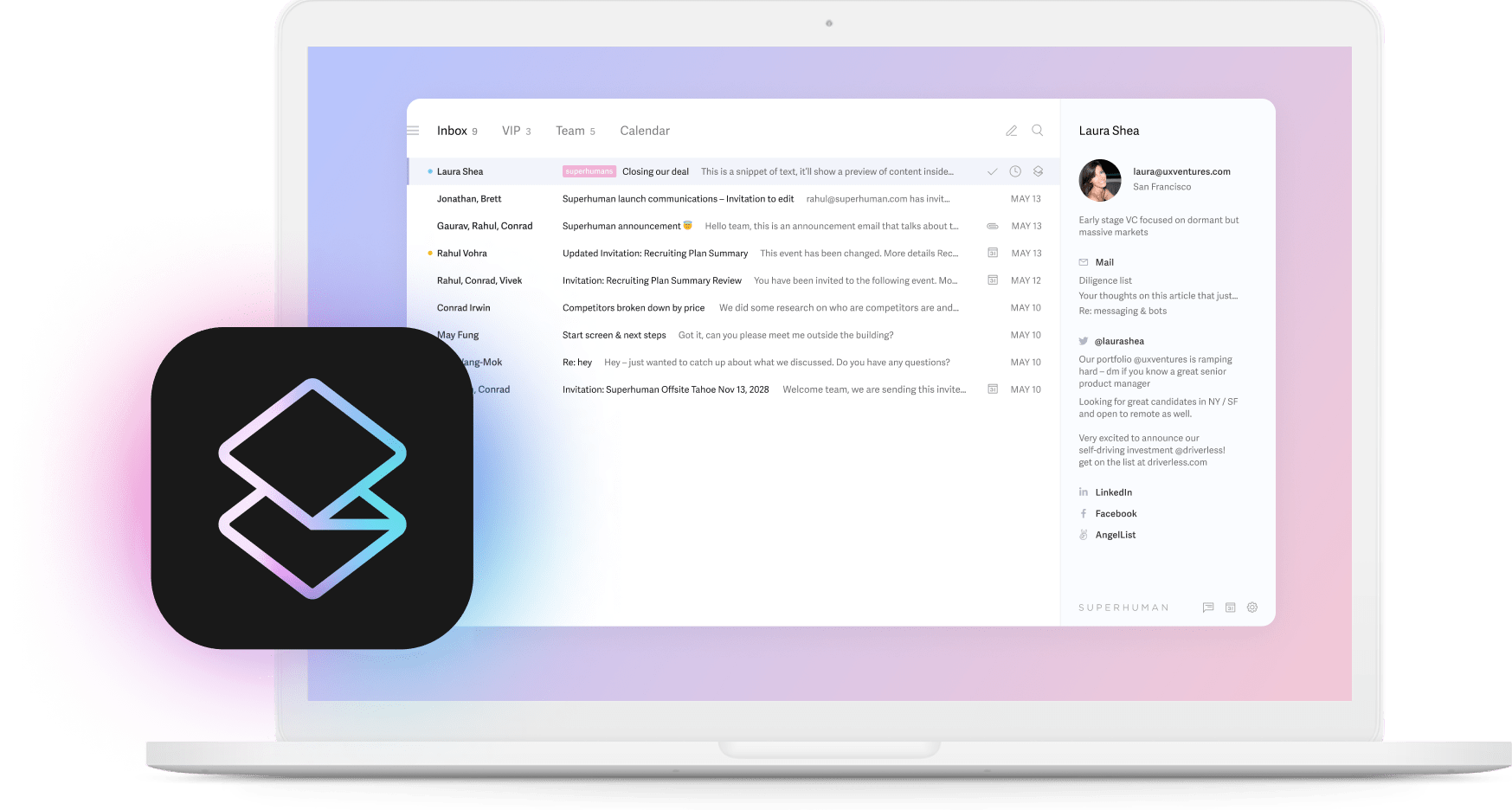
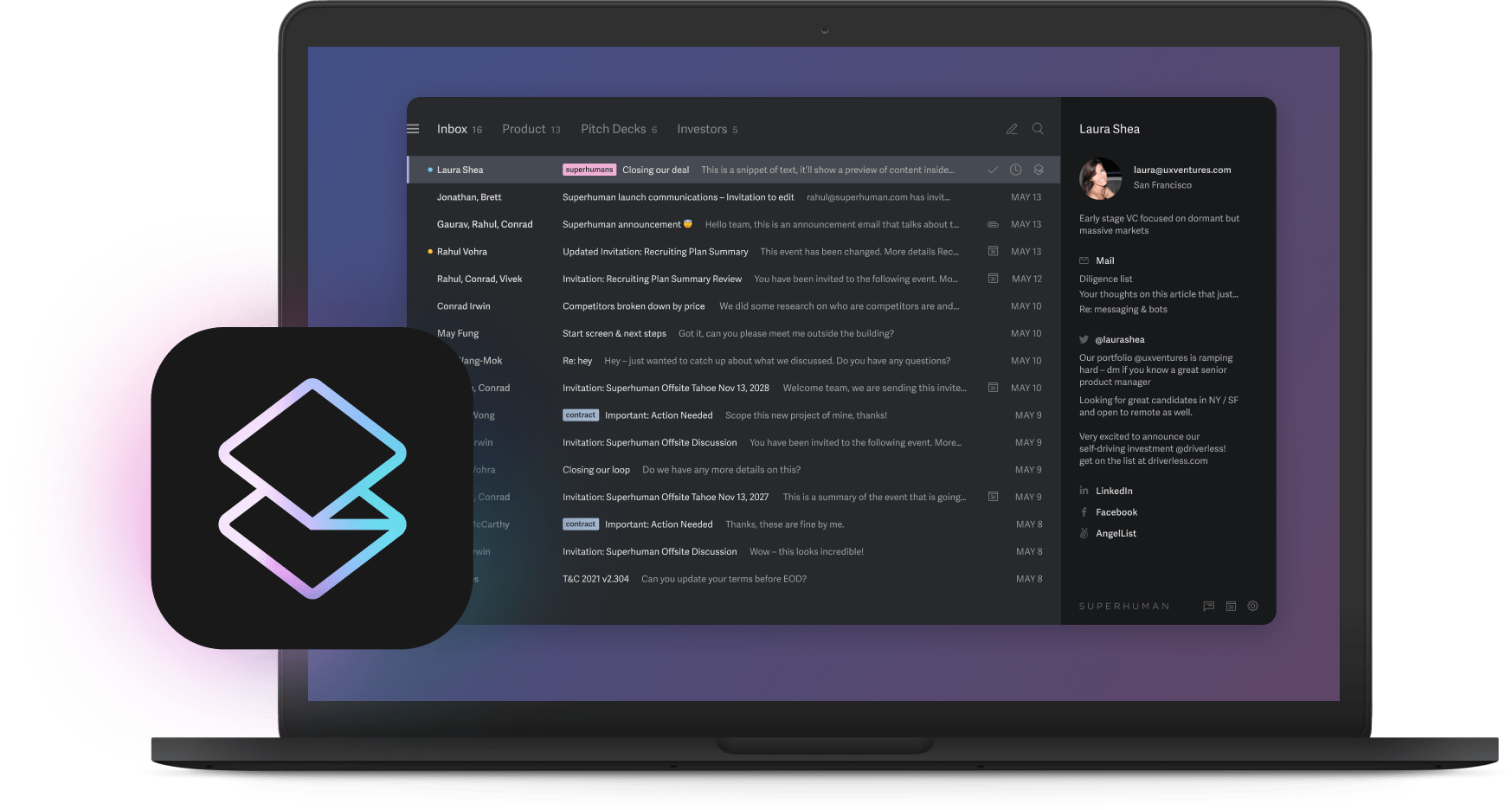
Superhuman Mail is the most productive email app ever made for high-volume emailers. It turns these practices into fast, repeatable workflows with Split Inbox, AI drafting, reminders, and powerful keyboard shortcuts.
Teams using Superhuman Mail consistently report replying 1–2 days faster, handling roughly twice as many emails in the same amount of time, and saving about 4 hours per person every week.
Try a 15-minute inbox reset today. Clear the backlog, set up your processing folders, and start building habits that turn email management from daily stress into a competitive advantage.
FAQs
How much of an executive’s email should an assistant manage?
Most assistants can eventually handle the majority of day-to-day messages, including scheduling, internal updates, vendor questions, and status checks. The key is to agree on clear escalation rules so only truly strategic, sensitive, or high-risk items go directly to your leader.
How do I convince my boss to give me his email access?
Start with a small, low-risk category (such as calendar, travel, or internal communications) and propose a trial period. Show the time saved each week and provide brief recaps so they see the benefits without feeling like they are losing control of their inbox.
How do I stop important emails from slipping through the cracks?
Use a combination of folders (Action and Waiting), clear prioritization rules, and reminders. Every important email should either be in a dedicated folder, on a task list, or tied to a reminder – never sitting forgotten in the main inbox.
What’s the best way to handle newsletters and promotional emails?
Set rules or filters so newsletters, marketing emails, and system notifications skip the main inbox and go into a “Read later” or “Newsletters” folder. Review that folder in batches, and unsubscribe ruthlessly from anything that no longer adds value.
How often should an executive assistant check the inbox?
For most leaders, checking and triaging the inbox a few times per day works better than constant monitoring. Many assistants use a morning, midday, and late-afternoon pass to apply the Four D’s framework while preserving focus time for deeper work.