
The average knowledge worker spends 11 hours per week just managing and organizing email. Add in repetitive scheduling, data entry, and administrative tasks, and it's no wonder professionals feel buried under busywork instead of focusing on high-impact work.
AI task automation changes this equation. By delegating routine tasks to intelligent tools, teams are reclaiming hours every week while improving accuracy and consistency. In fact, employees using AI report an average 40% productivity boost, with some functions seeing improvements of 25% to 55%.
This guide covers the 25 best AI automation tools for 2025, plus everything you need to know about how to use AI to automate tasks effectively.
25 AI task automation tools at a glance
What is AI task automation?
AI task automation uses artificial intelligence and machine learning to perform repetitive, rule-based tasks without human intervention. Unlike traditional automation that follows rigid scripts, AI automation can learn patterns, make decisions, and adapt to new situations, making it suitable for tasks that previously required human judgment.
Common examples of AI task automation include:
- Email triage, prioritization, and drafting responses
- Calendar scheduling and meeting coordination
- Data entry and extraction from documents
- Content generation and editing
- Customer support ticket routing and responses
- Workflow triggers and cross-app integrations
The key difference from traditional automation is intelligence: AI tools can understand context, handle variations, and improve over time. Understanding how to use AI to automate tasks starts with identifying which processes in your workflow would benefit most from this intelligence.
25 best AI task automation tools for 2025
Email automation
1. Superhuman Mail
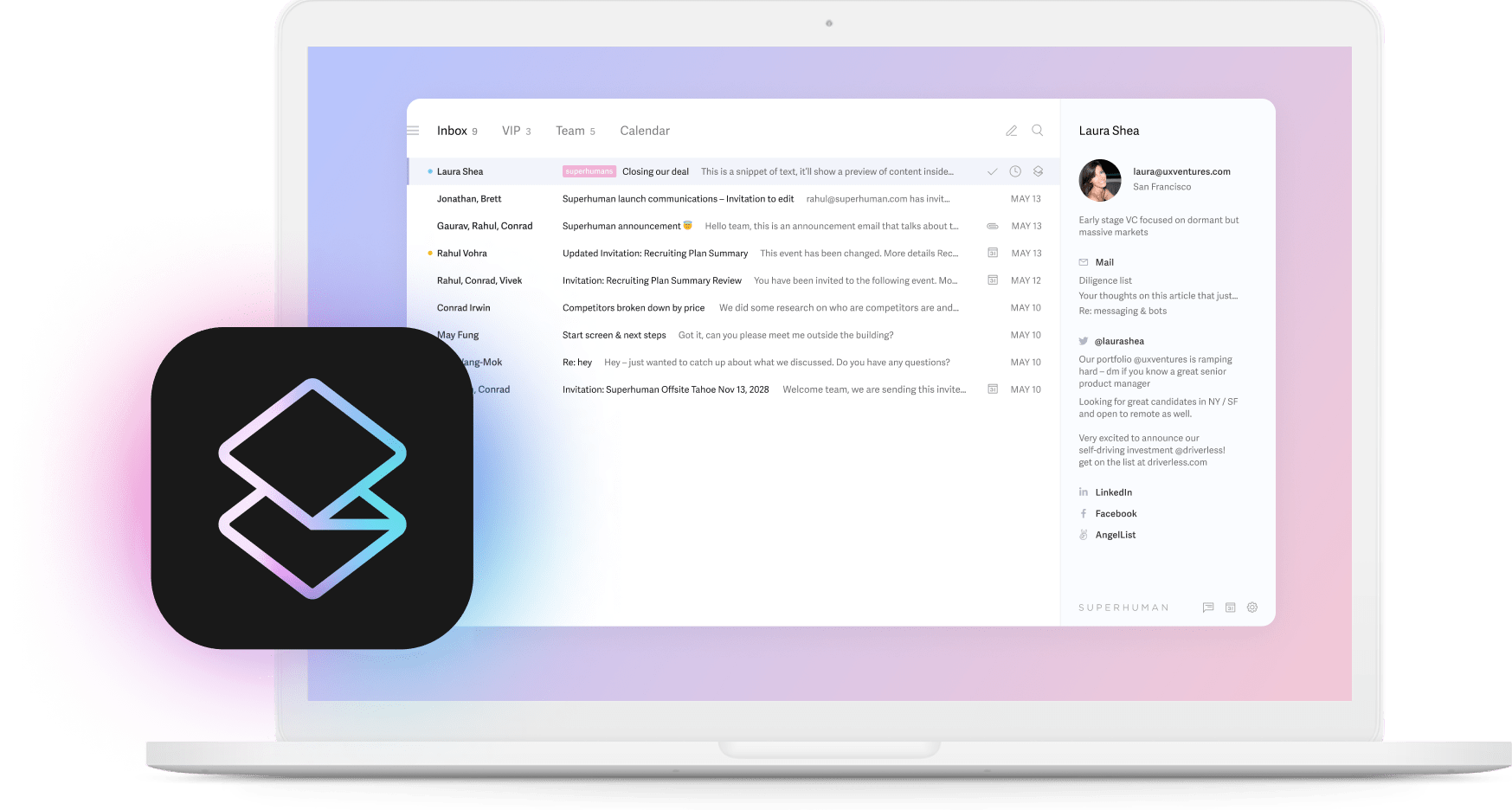
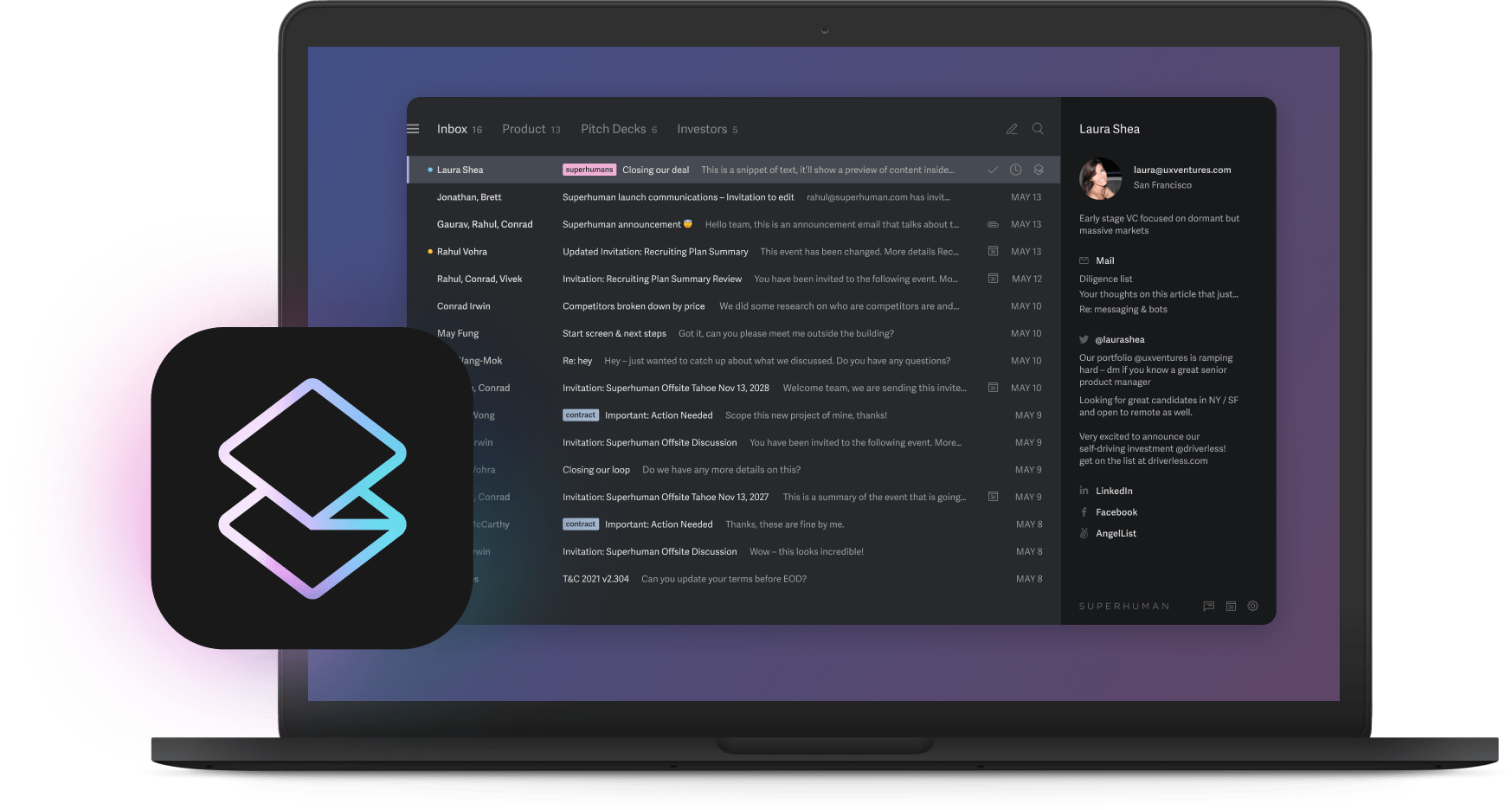
Superhuman Mail is the fastest email experience with AI built into every interaction. While many email clients bolt on AI features as an afterthought, Superhuman was designed from the ground up for speed, intelligence, and high-volume workflows.
Some of its key capabilities:
- Auto Labels & Auto Archive: automatically categorize or archive incoming emails so you can focus on what matters.
- Instant Reply / Auto Drafts: draft complete emails from a few words; generate contextual responses instantly.
- Split Inbox: separate important messages (VIPs, team, key contacts) from newsletters, notifications, etc.
- Ask AI & AI-powered Search: search by natural language and let AI pull up relevant messages, threads, and context.
- Auto Summarize: 1-line summaries of conversations with expandable details, so you can scan quickly.
- Snippets: save and insert reusable templates, paragraphs, or full emails (with attachments or CC/BCC) to speed up outreach.
Learn more about Superhuman Mail's full feature set.
Best for: Executives, founders, sales teams, and high-volume email users who need speed and intelligence.
2. Sanebox
Sanebox offers intelligent email filtering that learns from your behavior to automatically sort messages. It moves newsletters, promotions, and low-priority mail into separate folders (e.g., "SaneLater", "SaneNews"), keeping your main inbox focused on what matters.
Best for: Users who want automatic email sorting without switching email clients.
3. Shortwave
Shortwave is a Gmail-native email client that adds AI features like bundling related emails into manageable groups and offering conversation summaries, helping you catch up quickly when you come back to your inbox. It's optimized for Gmail users who want inbox decluttering and quick summarization.
Best for: Gmail users who want modern AI-powered summaries and inbox bundling.
4. Spark
Spark brings team-focused email management to the table: shared inboxes, collaborative drafts, templates, combined with AI-powered assistance. Useful for teams working together on customer support, outreach, or shared project threads.
Best for: Teams needing collaborative email features alongside AI assistance.
Writing and content automation
5. Grammarly
Grammarly offers more than grammar checking. It provides tone detection, clarity suggestions, and helps maintain consistency across all written communication (email, docs, messaging). Great for teams prioritizing brand voice, professionalism, and clarity.
Best for: Teams that need consistent, polished communication across email, documents, and messaging.
6. Jasper
Jasper is an AI content platform optimized for marketing teams. It helps generate blog posts, social media content, ad copy, and maintains a cohesive voice when trained properly.
Best for: Marketing teams producing high volumes of content.
7. Copy.ai
Copy.ai is a writing tool focused on marketing and e-commerce copy. It provides templates for emails, product descriptions, ads, social posts, streamlining copy generation and saving time.
Best for: E-commerce and marketing teams needing quick copy generation.
8. Writer
Writer is an enterprise-grade AI writing platform with strong governance, supporting style guides, brand voice enforcement, compliance and terminology control. Ideal for large or regulated organizations.
Best for: Large organizations with strict brand voice and compliance requirements.
Scheduling and calendar automation
9. Reclaim.ai
Reclaim.ai is an AI calendar assistant that automatically schedules tasks, habits, and meetings around your priorities. It protects focus time and dynamically adjusts schedules as priorities shift.
Best for: Individuals and teams who want automated time-blocking and schedule optimization.
10. Clockwise
Clockwise is a team calendar optimization tool that creates focus time blocks and coordinates meeting schedules across the organization.
Best for: Teams that need coordinated calendar management and focus-time protection.
11. Motion
Motion offers AI-powered project and calendar management. It automatically schedules tasks based on deadlines, priorities, and available time, ideal for balancing multiple projects.
Best for: Project managers and teams juggling multiple deadlines.
12. Cal.com
Cal.com is an open-source scheduling platform with AI features. It offers customizable scheduling, self-hosting options, and flexible booking, useful for teams or organizations needing control over scheduling workflows.
Best for: Teams wanting customizable scheduling with self-hosting options.
Workflow and integration automation
13. Zapier
Zapier is the most widely used workflow automation platform. It connects 6,000+ apps with if-then logic and now includes AI features for building automations from natural language descriptions.
Best for: Teams connecting multiple SaaS tools without developer resources.
14. Make (formerly Integromat)
Make offers visual workflow automation with advanced logic capabilities, supporting complex branching, iterations, and data transformations.
Best for: Power users who need sophisticated automation workflows.
15. n8n
n8n is open-source workflow automation with a self-hosting option. It offers AI nodes (in some configurations) for integrating language models into workflows and gives full control over infrastructure.
Best for: Technical teams wanting control over their automation infrastructure.
16. Microsoft Power Automate
Microsoft Power Automate provides enterprise workflow automation deeply integrated with the Microsoft 365 ecosystem. It includes AI Builder for document processing, predictions, and data automation.
Best for: Organizations already using the Microsoft 365 ecosystem.
Document and data automation
17. Coda
Coda is an all-in-one doc that combines documents, spreadsheets, and apps. AI features help summarize content, generate formulas, and automate data workflows. It integrates well with other productivity tools.
Best for: Teams wanting flexible, programmable documents with AI assistance.
18. Notion AI
Notion AI adds AI features to the popular workspace tool. You can summarize pages, generate content, translate text, and extract action items automatically, useful for documentation and project management workflows.
Best for: Teams already using Notion for documentation and project management.
19. Docsumo
Docsumo provides intelligent document processing for invoices, receipts, and other forms, extracting structured data with high accuracy. Ideal for finance teams.
Best for: Finance teams processing high volumes of documents.
20. Rossum
Rossum offers AI-powered document understanding for complex business documents: contracts, purchase orders, invoices, and other unstructured data.
Best for: Enterprises with complex document-processing needs (contracts, POs, unstructured data).
Customer service automation
21. Intercom
Intercom is an AI-powered customer service platform that uses your knowledge base to answer customer questions, escalate complex issues to human agents when needed, and generally automate support workflows.
Best for: SaaS companies with extensive help documentation needing AI-powered support.
22. Zendesk
Zendesk embeds AI features throughout the Zendesk platform. It can auto-triage tickets, suggest responses, and identify customer sentiment, helpful for support teams needing scalable customer service.
Best for: Support teams already using Zendesk wanting AI-assisted ticket triage.
23. Freshdesk Freddy AI
Freshdesk Freddy AI is an AI assistant for customer support. It provides agent assistance, auto-resolution, intelligent routing, and helps streamline support workflows.
Best for: Small to mid-size support teams wanting affordable AI features.
Sales and CRM automation
24. Clay
Clay offers AI-powered data enrichment and outreach automation. It pulls information from 75+ data sources to personalize outreach at scale.
Best for: Sales and marketing teams doing high-volume prospecting and data enrichment.
25. Salesforce Einstein
Salesforce Einstein provides AI capabilities across the Salesforce platform: predicting lead scores, recommending next actions, and automating data capture.
Best for: Enterprises using Salesforce as their CRM and wanting embedded AI assistance.
6 key benefits of AI task automation
Organizations investing in AI automation see measurable improvements across multiple dimensions:
- Time savings. AI automation, especially for email triage, summarization, and reply drafting, reduces manual load, freeing up hours previously spent on repetitive tasks.
- Cost reduction. Automating routine processes helps reduce overhead associated with manual labor and errors.
- Improved accuracy. AI handles repetitive tasks consistently, reducing human error in data entry, content generation, and document processing.
- Faster response times. Automated email triage and responses, plus instant summarization and task generation, mean critical messages are addressed more quickly.
- Scalability. As workload grows, AI tools scale better than manual processes, enabling teams to handle increased volume without proportionally increasing headcount.
- Employee satisfaction. By offloading the mundane, employees focus more on strategic, creative, higher-value work.
For many professionals, email management alone delivers massive ROI: high-volume inboxes become manageable, follow-ups become timely, and communication becomes more efficient.
How to implement AI automation
Learning how to use AI to automate tasks requires a strategic approach. Follow these steps to identify the right opportunities and deploy automation effectively.
Audit your current workflows
Track how you and your team spend time each week. Identify repetitive, time-consuming, or low-value tasks, as those are prime candidates for automation.
Prioritize by impact and feasibility
Not all tasks are equally suitable for automation. Rank candidates by potential time saved and implementation complexity. Start with high-impact, low-complexity wins to build confidence and demonstrate ROI quickly.
Start small and measure results
Roll out automation with a pilot group (3–5 members) comfortable with new tools. Run the pilot for 2–4 weeks, track time saved, error rates, user satisfaction, and impact on quality.
Scale what works
Once validated, expand usage, provide training, and establish best practices. As AI automation becomes part of your workflow, revisit regularly to identify new opportunities and refine processes.
Reclaim your time
AI automation has moved from experimental to essential. For many knowledge workers, the fastest path to productivity gains starts with email, the highest-volume, most repetitive task. With the right tools, teams can reclaim hours weekly, reduce cognitive load, and focus on meaningful work.
Whether you're an executive buried in email, a support team overwhelmed with tickets, or a finance team drowning in invoices, now you know how to use AI to automate tasks and there's a tool here built for you.
Ready to see how much time AI can save you? Try Superhuman Mail and experience one of the fastest, most intelligent email clients available.