
Key takeaways
- Premium email justifies its cost at 50+ emails daily, with executives earning $150+/hour seeing 44x+ annual returns
- High-volume senders save 4+ hours weekly with productivity-focused platforms like Superhuman Mail
- Premium email costs $1-40/month, with basic business hosting at $6-8/month and productivity-focused clients at $25-33/month
- Custom domains boost credibility by 35%, email authentication (SPF/DKIM/DMARC) meets cyber insurance requirements, and CRM integrations save 3-4 minutes per email
- Free email is best for fewer than 50 daily emails, personal communications, or when budget is the primary constraint
You're staring at 120 unread emails, but by lunch, that number climbs to 200. For executives processing high volumes, you spend half your day in your inbox, yet critical messages still slip through the cracks.
Professionals spend 28% of their workweek reading and answering email. That's about 13 hours every week managing your inbox.
So when premium email services promise to cut that time in half, the question becomes urgent: Is premium email worth it?
The answer depends on three factors: your email volume (premium email justifies its cost at 50+ emails daily), your hourly compensation (executives earning $150+/hour see immediate positive ROI), and your feature requirements (custom domains, email authentication for cyber insurance compliance, or CRM integration for revenue-focused roles).
This guide shows when premium email makes financial sense for your specific situation.
What is premium email?
Premium email means using custom domain names (name@yourcompany.com) instead of generic providers (gmail.com, outlook.com). But the real difference goes beyond branding. Emails from free domains like Gmail or Yahoo are up to 35% more likely to be ignored compared to branded business addresses.
Premium email delivers three critical capabilities that free platforms can't provide:
- Administrative control over your communications. When employees use personal Gmail accounts, all emails and contacts disappear when they leave. Business email through M365 and Google Workspace gives you control over employee accounts with the ability to transfer files and data, protecting business continuity and preventing critical information loss.
- Email authentication for insurance compliance. Free personal accounts can't implement SPF, DKIM, or DMARC protocols because you don't control the domain. Cyber insurance providers increasingly require these authentication standards, creating potential coverage gaps for businesses using free services.
- Measurably better communication. That credibility gap translates directly to ignored outreach and lost opportunities. Custom domain email represents essential infrastructure for professionals whose income depends on response rates.
The real cost of free email for professionals
Free email seems smart until you calculate its hidden costs. Beyond the credibility penalty, free accounts create three specific problems.
The credibility and productivity cost
Ever wondered why some emails get ignored while others get instant responses? For sales professionals sending 50 outreach emails daily, that credibility gap directly impacts income. Custom domain email represents essential business infrastructure.
Free services operate on advertising and data monetization rather than subscriptions. You're the product being monetized. They provide everything 95% of people need for personal use and casual professionals. But for high-volume senders processing 200+ daily emails, you waste hours on manual tasks that premium services automate.
The compliance problem
Healthcare organizations and financial services face regulatory requirements that free services can't meet. Free email accounts lack the administrative controls, audit trails, and business associate agreements that HIPAA and other regulations require.
Beyond healthcare, cyber insurance providers increasingly mandate email authentication standards (SPF, DKIM, DMARC) that free personal accounts simply cannot implement. Without domain ownership, you have no way to configure these protocols or demonstrate compliance during audits.
If your industry requires specific compliance certifications or custom domain control for cyber insurance, free email isn't actually an option.
When premium email pays for itself: The ROI calculation
When does premium email justify its cost? Let's break down the math.
The conservative scenario
Consider an executive processing 100 emails daily. Premium services like Superhuman Mail can save you up to 4+ hours per week. A conservative 15% efficiency gain on 11.2 weekly email hours returns 1.68 hours weekly, or 87 hours annually.
Here's the breakdown:
- Time saved: 87 hours annually
- Value at $150/hour: $13,050
- Premium subscription cost: $300/year
- ROI: 44x return
- Payback period: Less than one week
The high-volume scenario
Executives processing 200+ emails daily spend 13-15 hours weekly managing their inbox. High-volume senders benefit disproportionately from productivity tools, with research showing that workers dealing with low email volumes reaped significantly less benefits from email batching than workers facing higher volumes.
At 4+ hours weekly saved:
- Time saved: 208 hours annually
- Value at $300/hour: $62,400
- Subscription cost: $300-400/year
- ROI: Exceeds 156x
The threshold
Premium email becomes financially justified when you process 50+ emails daily. Between 50-100 daily emails, ROI approaches positive territory. Below 50 emails daily, free services provide sufficient functionality.
Above 100 emails daily, premium email transforms from optional upgrade to essential infrastructure. For executives processing 200+ emails daily, not investing represents measurable productivity waste.
Key features that justify premium pricing
Not all premium features deliver equal value. These capabilities separate worthwhile investments from overpriced marketing.
AI-native voice matching
Generic AI sounds robotic. Premium services like Superhuman Mail analyze emails you've sent and match your tone with AI that learns from your communication patterns. This matters for executives whose reputation depends on authentic communication. You delegate email writing while maintaining your authentic voice.
CRM integration with context
Superhuman Mail surfaces full customer context from Salesforce, HubSpot, and Pipedrive directly in your inbox. The platform automatically logs emails and updates contact information, eliminating context-switching.
Revenue-focused professionals save significant time per email through integrated CRM context. For sales teams sending 50+ customer emails daily, this translates to 2.5-3.3 hours of daily productivity recovered.
Systematic inbox zero
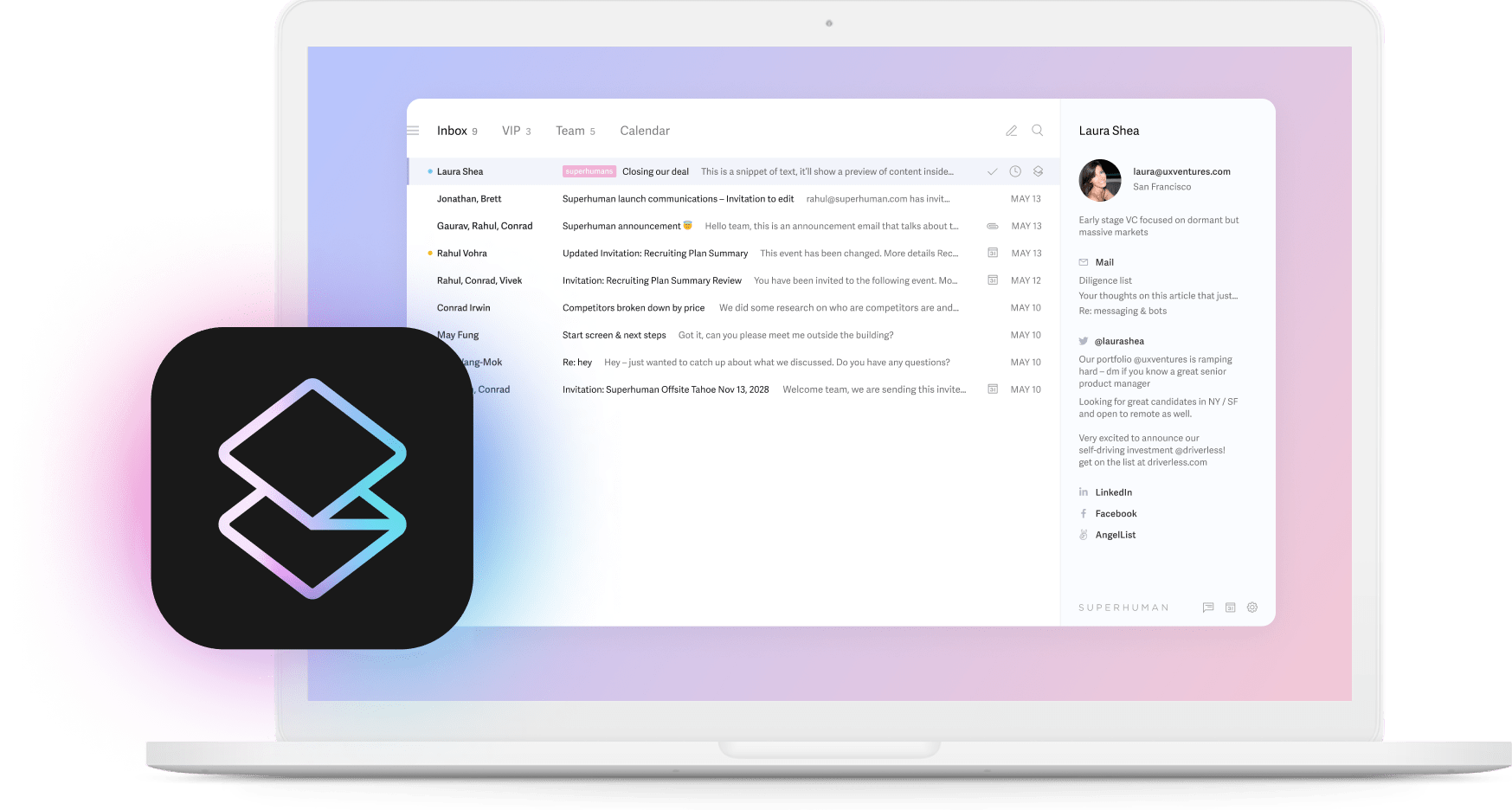
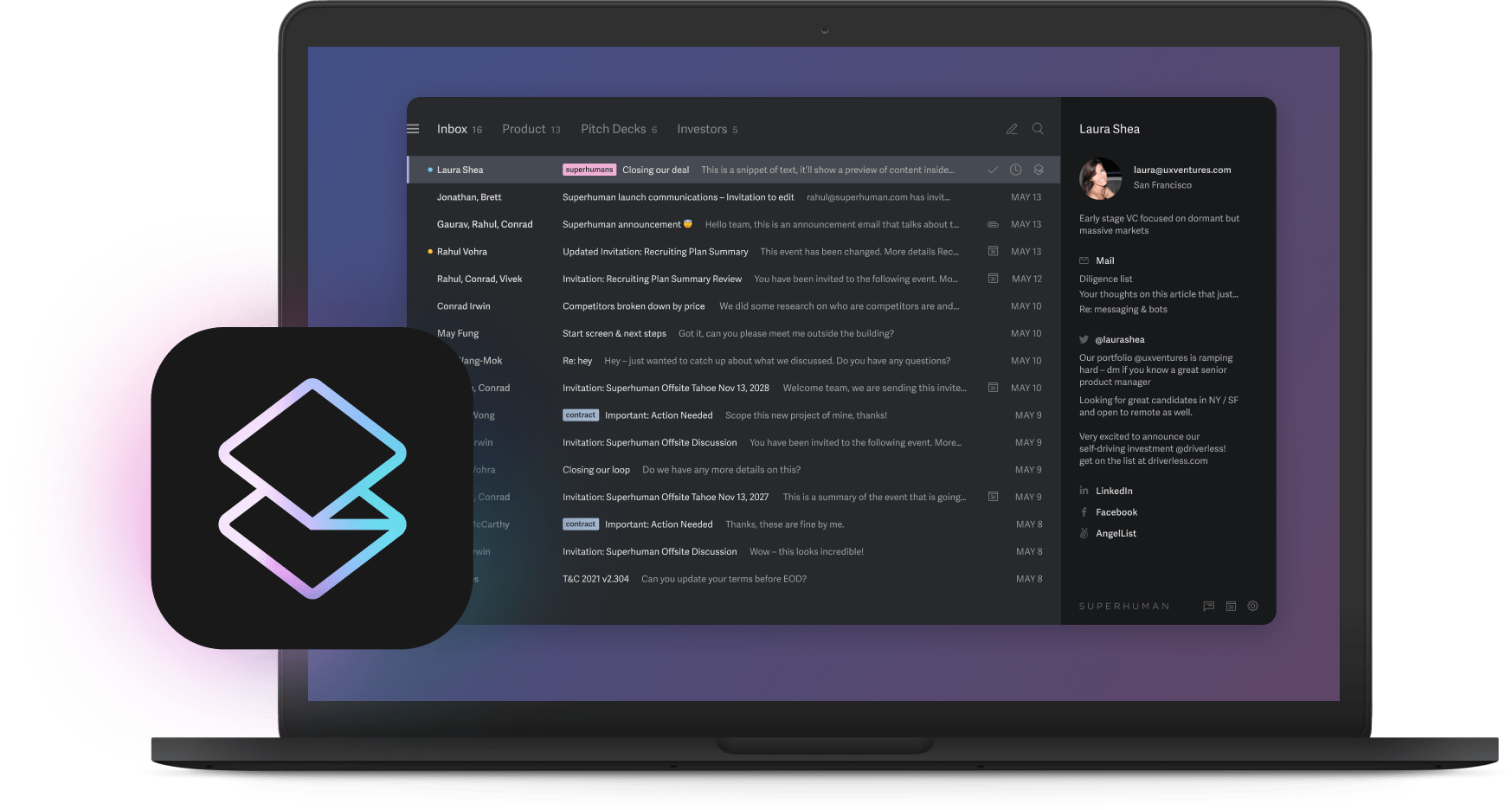
Premium services don't just promise inbox zero; they architect systematic approaches. Superhuman Mail employs Split Inbox organization, Automatic Reminders, Auto Labels, and keyboard shortcuts. This systematic architecture separates inbox zero from an unrealistic goal.
Sales teams achieve inbox zero 85% of days in an average month using these features.
When free email is fine (but basic)
Some people don't need premium email services. Free email works perfectly in these situations:
- Personal communications: Staying in touch with friends and family, online shopping, and newsletter subscriptions
- Professionals processing fewer than 50 emails daily: Time savings measure in minutes weekly
- Small businesses: Small businesses without formal compliance certifications like HIPAA or SOC 2 may still be strongly advised to implement SPF, DKIM, and DMARC email authentication for security and deliverability, and small businesses in regulated industries such as healthcare or financial services can be legally or contractually required to comply with HIPAA, SOC 2, or other frameworks regardless of size
- Teams prioritizing integration: Workflow lives entirely in Google Workspace or Microsoft 365
For professionals in these categories, free email handles the basics. But as email volume grows or your role becomes more client-facing, the limitations of free services become more apparent. Many professionals find that crossing the 50+ daily email threshold is the tipping point where premium features start delivering measurable time savings.
How Superhuman Mail helps busy executives achieve inbox zero and save 4+ hours per week
Inbox zero feels impossible when you're buried under 200+ daily emails. Superhuman Mail makes it systematic through five interconnected features.
- Split Inbox organization separates emails into customizable tabs for teams, VIPs, and tools. You focus on similar emails together, whether sales emails, team updates, or customer issues, eliminating context switching.
- AI-native prioritization automatically labels and sorts messages, auto-archives lower-priority emails, and provides one-line summaries. Marketing emails and cold pitches get organized into custom tabs.
- Automatic reminders resurface emails at optimal times. You hit inbox zero by moving messages out, knowing they'll return when you need them.
- Keyboard shortcuts eliminate mouse clicking. Every action happens through keyboard commands.
- Voice-matched AI writing drafts responses that sound like you because the system learned from your previous emails. You edit rather than compose from scratch.
The combination delivers results: sales teams achieve inbox zero 85% of the time. One CEO reports doubling deal volume in the first month.
The bottom line: Is premium email worth your investment?
Premium email is worth it for the right professionals. Executives processing 100+ emails daily, those in email-critical roles, or those requiring compliance features, see measurable ROI that justifies investment.
The decision comes down to math: your email volume multiplied by your time value versus subscription pricing. For executives processing 200+ emails daily, that math is overwhelmingly conclusive.
Superhuman Mail makes email feel effortless for teams drowning in their inbox. The platform saves 4+ hours per person every week and helps teams respond 12 hours faster. With AI-native features that match your voice, CRM integrations that surface customer context, and systematic inbox zero workflows, Superhuman Mail transforms email from productivity drain to competitive advantage.
FAQs
Is premium email worth it for small businesses?
Premium email justifies its cost for small businesses when you need custom domain addresses for professional credibility and cyber insurance compliance, administrative controls over employee accounts, or regulatory compliance certifications. At $6-8/user/month, basic business email hosting delivers these capabilities. Skip premium if you're processing fewer than 50 emails daily without domain requirements or compliance obligations.
How much time does premium email actually save?
High-volume senders save 4+ hours weekly with productivity-focused platforms like Superhuman Mail. Executives using CRM integrations save significant time per email by eliminating application switching. For professionals processing 100+ emails daily, this translates to approximately 2.5-3.3 hours recovered weekly.
Which professionals benefit most from premium email?
Premium email delivers highest value for professionals processing 200+ emails daily in email-critical roles: sales executives managing customer relationships, founders coordinating across multiple teams, customer success leaders handling high-touch accounts, consultants with client-heavy communication, and C-suite executives where response speed impacts business outcomes.
Is it worth paying for an email account?
Paying for an email account is worth it when you process 50+ emails daily, need a custom domain for professional credibility, or have compliance requirements like HIPAA or SOC 2. For executives earning $150+/hour, even modest time savings (1-4 hours weekly) deliver ROI exceeding 40x annually. If you're handling personal communications or fewer than 30 emails daily, free services like Gmail provide everything you need.
What is the 60 40 rule in email?
The 60/40 rule suggests spending 60% of your email time on high-priority messages and 40% on everything else. Premium email services automate this prioritization through AI-native sorting, auto-labeling, and split inbox organization. Instead of manually triaging every message, tools like Superhuman Mail automatically surface VIP emails and customer communications while organizing newsletters and notifications into separate tabs.
Which email gets hacked the most?
Free email providers with the largest user bases, particularly Gmail, Yahoo, and Outlook, experience the highest volume of hacking attempts simply due to their scale. Yahoo suffered the largest data breach in history, affecting 3 billion accounts. However, premium business email with proper security configurations (SPF, DKIM, DMARC) and administrative controls offers significantly stronger protection than free personal accounts, which is why cyber insurance providers increasingly require these authentication standards.
Why are people leaving Gmail?
Professionals leave Gmail for several reasons: privacy concerns over data monetization and ad targeting, the need for custom domain email addresses for credibility, compliance requirements that free accounts can't meet, and productivity limitations when processing high email volumes. Premium alternatives like Superhuman Mail offer keyboard-driven workflows, AI that matches your voice, and CRM integrations that save hours weekly, features Gmail's free tier doesn't provide.