Sending an email follow-up reminder: Best practices & examples

Learn how to write an effective email follow-up reminder that gets responses. Includes timing tips, templates, examples, and common mistakes to avoid.

At work, you're constantly sending and receiving emails. The average professional receives over 120 emails daily, spending nearly 28% of their workday reading and responding to messages. With inboxes this busy, sending an email follow-up reminder is often necessary to get a response.
Here's the reality: a single follow-up can nearly double your response rate from 16% to 27%. Yet 27% of small businesses never follow up after initial contact, even though 81% of customers welcome post-meeting follow-up emails. In this article, we'll cover the best practices for email follow-up reminders to help you boost your chances of receiving a response.
Understanding email follow-up reminders
An email follow-up reminder is a message you send after your initial email hasn't received a response. It serves as a polite nudge to bring your previous message back to the recipient's attention without being pushy or aggressive.
The purpose of a follow-up reminder is simple: to increase your chances of getting a response. Whether you're following up after a job interview, a sales pitch, a networking event, or an internal request, the goal is to prompt action while maintaining professionalism.
Effective email follow-up reminders share several key characteristics:
- Polite and professional tone that acknowledges the recipient's busy schedule
- Brief reference to your original message or conversation
- Added value through new information or a different angle
- Clear call to action that makes responding easy
Understanding when and how to send these reminders can significantly impact your professional success, from landing job offers to closing sales deals.
When to send an email follow-up reminder
Time your message right. Two things matter: how long it's been since your previous email and what time of day you should send your follow-up.
Most people are busy. Employees face 275 daily interruptions from meetings, emails, or chats. With so much noise in our inboxes, emails easily slip through the cracks.
Context matters when considering timing. For situations like a job interview follow-up, send a thank-you email within 24 hours and wait one to two weeks before sending a status update inquiry. Time-sensitive issues like contracts or bookings can justify a follow-up after just a few hours. According to Harvard Business Review research, companies that respond to leads within one hour are nearly seven times more likely to qualify them than those who wait even one hour longer.
Here's a quick timing guide based on the scenario:
- Job interviews: Send a thank-you email within 24 hours of the interview, then follow up on the status after 1-2 weeks if you haven't heard back.
- Sales outreach: Wait at least three business days before sending cold outreach. Follow up within 24 to 48 hours after meetings or demos.
- Networking: Send follow-ups within 24 to 48 hours after face-to-face meetings or events. Wait three to five business days for cold networking emails.
- Client communications: Follow up 2-3 days after your initial email. Space subsequent follow-ups 3-7 days apart, depending on urgency.
- Internal requests: Wait at least 3 full business days for standard requests. Follow up within one day for urgent matters.
As for what time to send an email follow-up reminder, personalize timing based on your specific audience rather than relying on universal rules. Consider your recipient's specific work patterns, time zone, and communication preferences.
Pro tip: Set expectations in your initial email about when you will follow up. For example, mention "I will check back next week if I don't hear from you." This approach reduces friction and increases response rates when you do send your email follow-up reminder.

How many email follow-up reminders should you send?
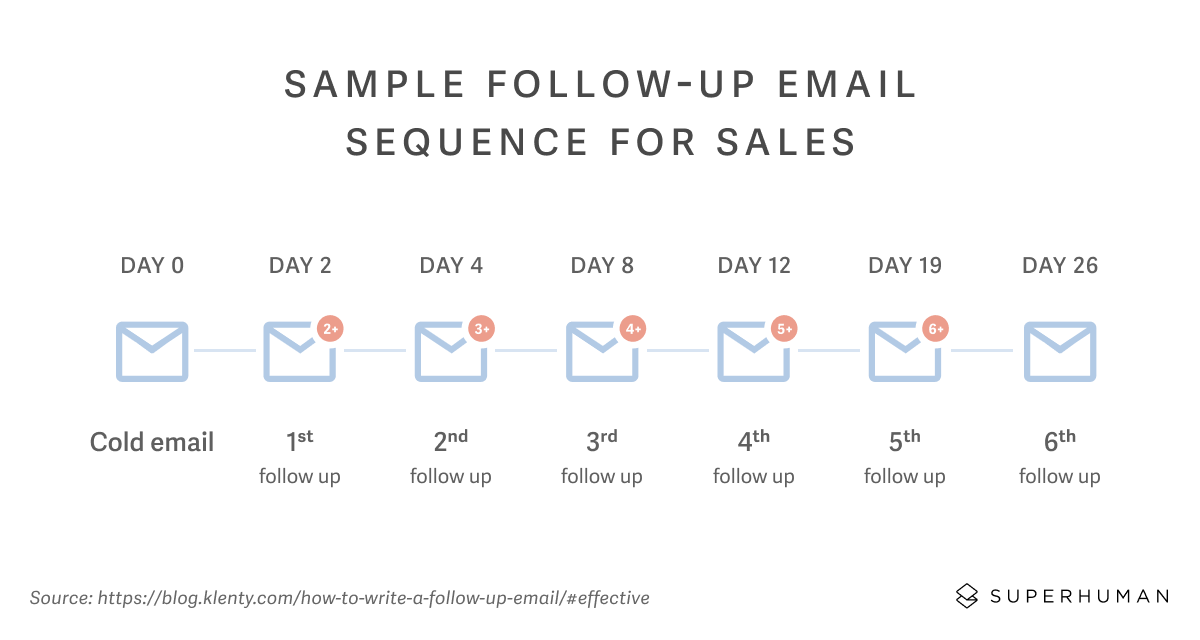
One of the most common questions about email follow-up reminder strategies is how many messages to send before giving up. The research provides clear guidance: persistence pays off, but there's a point of diminishing returns.
- For warm leads: 3-5 emails typically work best.
- For cold leads: Five to eight touchpoints may be necessary, with deals often closing after the fifth contact.
- For job applications: Limit yourself to one well-timed follow-up to avoid appearing desperate.
- For networking: Two to three emails maximum before moving on for cold networking contacts.
The key insight: while 44% of sales reps give up after just one follow-up, 80% of sales require five follow-ups after the initial meeting. This gap between common practice and what's required represents a competitive advantage for those willing to persist strategically.
Best subject lines for email follow-up reminders
A subject line could be the reason your email is not getting opened. Subject lines between 30-50 characters achieve the highest open rates, especially when personalized with the recipient's name (which can boost opens by 26-50%) or formatted as a question rather than a statement.
For example, "Thoughts on Tuesday's proposal?" outperforms generic lines like "Following up."
Effective subject line examples:
- "Quick question, Sarah" (21 characters, personalized, question-based)
- "Thoughts on Tuesday's proposal?" (31 characters, reference-based)
- "Should I close your file, Michael?" (36 characters, personalized)
- "[Recipient's name], I don't want you to miss this!"
- "Looking for more information?"
Your subject line should engage the recipient and add value. Personalization significantly boosts engagement.
Best practices for email follow-up reminders
Keep your email clear and concise, and make sure you follow proper email etiquette. Let them know why you're reaching out and what action you expect them to take.
- Optimal email length matters. Emails between 75-100 words achieve response rates of approximately 51%. Emails shorter than 25 words lack sufficient context, while longer emails see diminishing returns.
- Add value with each follow-up. Each email follow-up reminder should offer something new: fresh information, a different perspective, or a more convenient response method. Simply repeating your original request rarely works.
- Use proper structure. Organize your email with short paragraphs and bullet points for easy scanning. Include one primary call to action per email.
- Personalize beyond the name. Go beyond first-name personalization by referencing specific details from previous conversations, mentioning mutual connections, or noting something relevant about their company.
Be sure to proofread your message after you write it. Review your email for grammatical errors, make sure your intentions are clear, and put yourself in the recipient's shoes to see if you would engage with your message.
Consider using AI tools for real-time grammar and tone adjustments. 82% of executives now use AI for email-related tasks, and these tools can reduce drafting time by 50-70%. However, always review AI-generated suggestions manually to maintain your genuine voice.
Common email follow-up reminder mistakes to avoid
Even well-intentioned follow-ups can backfire if you make these common mistakes.
- Following up too soon or too late. For most professional scenarios, wait 3-5 business days before your first follow-up, though job interviews warrant a 24-hour thank-you email.
- Using aggressive or demanding language. Phrases like "I haven't heard from you" or "You never responded" put recipients on the defensive. Instead, approach your email follow-up reminder as a polite nudge.
- Sending the same message repeatedly. Each follow-up should add value. Simply forwarding your original email with "Just following up" shows no effort.
- Making it all about you. Focus on how you can help solve their problem rather than what you need from them.
- Writing walls of text. Long, dense paragraphs get skimmed or skipped entirely, especially on mobile devices.
- Including too many calls to action. Stick to one clear CTA per message to avoid decision paralysis.
- Not knowing when to stop. If you've sent three to four follow-ups with no response, it may be time to try a different channel or accept that this opportunity isn't viable.
Email follow-up reminder templates
To give you the best shot at getting a response, here are simple and effective templates you can modify to fit your needs.
1. After a meeting
Subject line: Hi [name], it was a pleasure to meet you!
Body:
Thank you for taking the time to speak with me the other day. The conversation about [specific topic you discussed] was valuable. Based on what you shared about your company's current priorities, there's real potential to explore how [specific value/solution] could address some of the challenges you mentioned. Would you be open to a brief follow-up conversation next week?
Here's a link to my calendar [or other call to action] to connect.
Best regards, [Your name], [job title] at [company name]
2. After a cold email or initial connection
Subject line: [Recipient's name], I don't want you to miss this!
Body:
Hope your last week has gone well.
Wanted to reach back out and share additional information you may find helpful [link to a case study, etc]. This could be helpful in addressing your [need, such as a marketing strategy, competitive pricing, time savings, etc.].
Would love to touch base with you over a quick phone call. Let me know when would be best for you.
Best regards, [Your name], [job title] at [company name]
3. After a job interview
Subject line: Thank you for the [Job Title] interview
Body:
Thank you for taking the time to meet with me today about the [Job Title] position. Learning more about [specific topic discussed] and how the team approaches [relevant challenge] was insightful.
Our conversation reinforced my enthusiasm for this opportunity. Please don't hesitate to reach out if you need any additional information.
Best regards, [Your name]
4. Final follow-up (breakup email)
Subject line: Should I close your file, Michael?
Body:
Hi [name],
Reaching out a few times about [topic/opportunity] and haven't heard back, which is completely understandable given how busy things can get.
Don't want to keep bothering you, so will assume the timing isn't right. If anything changes in the future, would still love to connect.
Wishing you all the best, [Your name], [Job title] at [Company name]
5. Internal follow-up
Subject line: Quick follow-up: [Project name/request]
Body:
Hi [name],
Wanted to follow up on the proposal we discussed last week. Know things have been busy, but wanted to check in and see if you had any questions. Happy to discuss any concerns or schedule a brief call if that would be helpful.
Thanks, [Your name]
Closing thoughts
With a well-written and well-timed email follow-up reminder, you can improve your chances of a response significantly. Remember that persistence pays off: a single follow-up can nearly double your response rate, and many closed deals started as non-response conversations revived through strategic follow-up.
Make sure that your follow-ups are spaced at least three business days apart and that you proofread what you've written. Rather than repeating your original request, add value with each message. Keep subject lines concise at 30-50 characters, ideally using question-based formats.
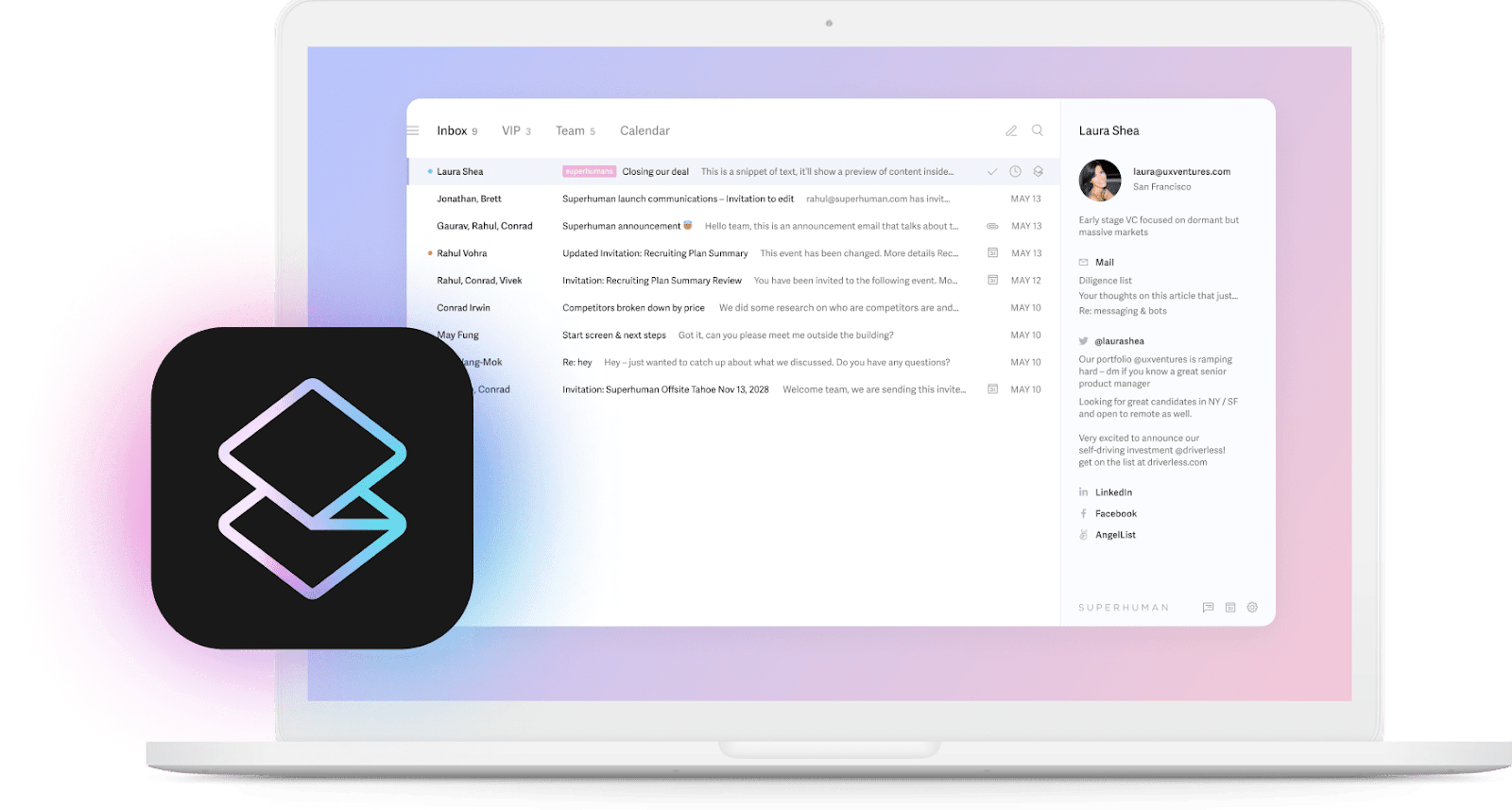
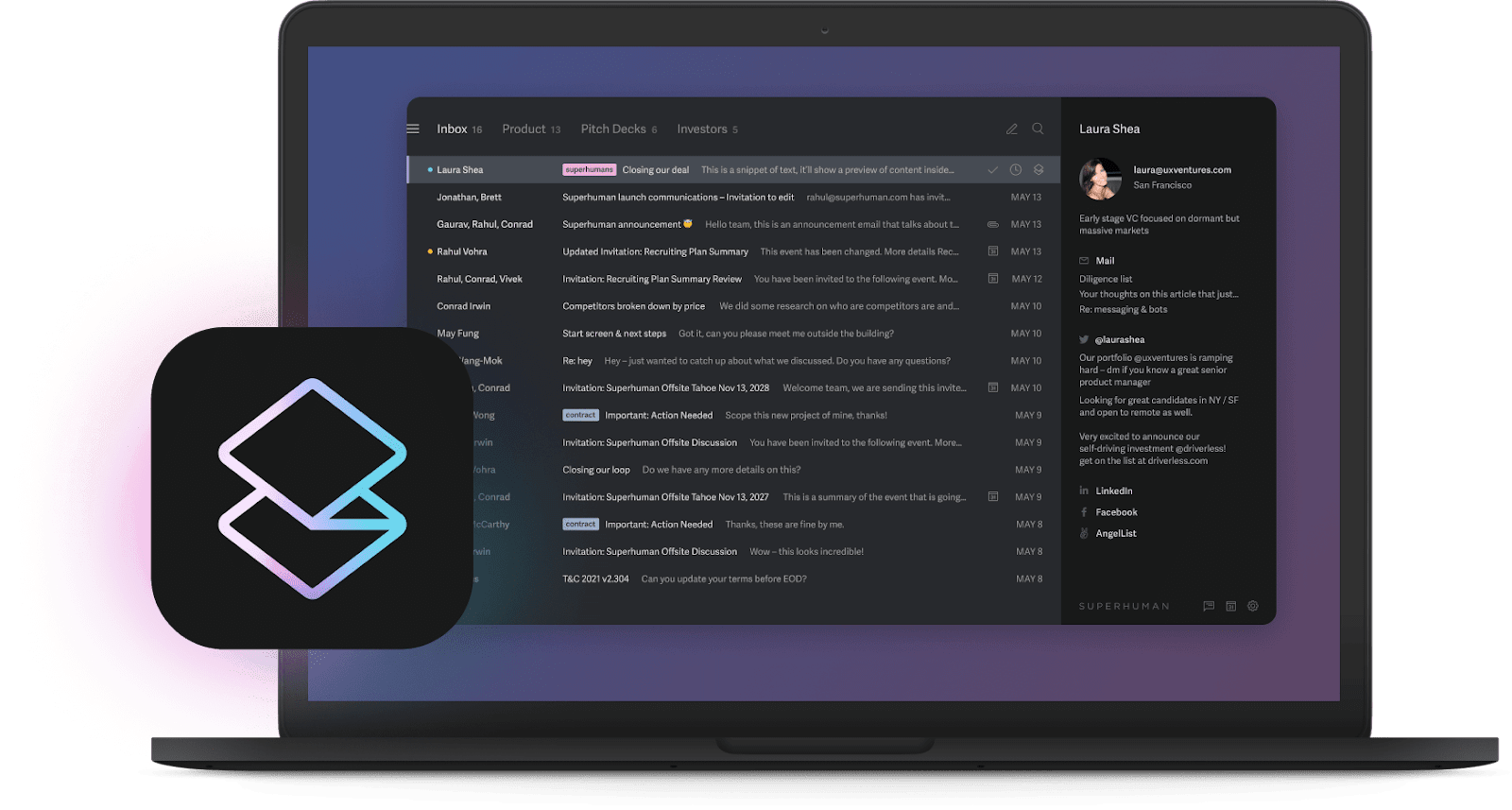
Consider using AI tools to streamline your email follow-up reminder process while maintaining authenticity. Ready to reclaim time from your inbox? Superhuman Mail helps you fly through email with AI tools that save 4 hours per week.
Get Started with Superhuman Mail.
Frequently asked questions about email follow-up reminders
How soon should I send an email follow-up reminder?
The answer depends on context. For job interview thank-you notes, send within 24 hours. For sales outreach after a meeting, wait 24 to 48 hours. For cold emails, wait three to five business days before your first follow-up.
How do you politely follow up on an email?
Keep your tone professional and understanding. Acknowledge that your recipient may be busy, reference your previous communication briefly, add value with new information if possible, and include a clear but non-demanding call to action.
How many follow-up emails is too many?
For most situations, three to five follow-ups is appropriate. Sales scenarios warrant more persistence (five to eight touchpoints for cold leads), while job applications should include an initial email plus one or two follow-ups.
Should I use the same subject line for email follow-up reminders?
Using "Re:" maintains conversation continuity. However, a fresh, personalized subject line typically outperforms generic replies. Keep subject lines to 30-50 characters for mobile optimization.
How long should an email follow-up reminder be?
75 to 100 words is optimal for response rates. Focus on essential information and one clear call to action.