Best business email service providers guide for 2026
Compare the top business email providers based on productivity, security, and collaboration features. Find the right email service for your team's needs.

You're drowning in emails. Your inbox hits 200 messages before lunch, half your team missed that critical client thread, and you just spent 20 minutes searching for an attachment from three weeks ago. Sound familiar?
Email remains the backbone of professional communication, but most platforms treat it like it's still 1999. The right business email service doesn't just deliver messages. It saves your team hours every week through intelligent automation, keeps sensitive data secure, and turns your inbox from a productivity drain into a competitive advantage.
What makes a great business email service
Think about your last workday. How much time did you spend just managing email? Searching for messages, organizing threads, writing the same response for the third time that week?
The best business email services eliminate that friction. Here's what separates platforms that help you fly through your inbox from those that slow you down.
Custom domain and branding
Your email address signals professionalism before you type a single word. Using yourname@yourcompany.com instead of a generic Gmail or Yahoo address tells clients and partners you're serious about your business. Custom domains give you control—when team members leave, you can reassign their addresses without losing important communications.
Deliverability and uptime
What good is sending an email if it lands in spam? Leading providers maintain 99.9% uptime and implement authentication protocols like SPF, DKIM, and DMARC to ensure your messages reach primary inboxes. Your email needs to work when you need it. Period.
Storage and collaboration tools
Nothing kills momentum like hitting a storage cap mid-project. Growing businesses need scalable solutions that expand with communication volume, not platforms that force constant cleanup.
Modern email platforms deliver value through seamless integration. Connection with calendars, document editors, and contact management creates workflows that actually save time. Advanced features like automatic message prioritization, AI-powered drafting assistance, and engagement tracking help teams work more efficiently.
Security and privacy
Your inbox contains everything. Client contracts, financial data, strategic plans, confidential discussions. If your email gets compromised, your business gets compromised.
Two-factor authentication, end-to-end encryption, and compliance certifications like SOC 2, HIPAA, and GDPR protect sensitive communications. Advanced threat protection guards against phishing, malware, and emerging attack vectors that evolve faster than traditional security can keep up.
Integrations and ecosystem
Your email doesn't exist in isolation. It connects to your CRM, project management tools, and dozens of other systems your team uses daily. Seamless integrations mean customer conversations automatically log to Salesforce, calendar invites sync across platforms, and important updates flow to the right Slack channels.
Cost versus value
Free email options seem attractive until you calculate the productivity cost. When evaluating email platforms, consider the hours saved through automation, intelligent organization, and collaboration features.
Premium email services earn their value when they deliver measurable time savings and improvements to team workflows. Calculate the time your team spends managing email, then assess which features would reduce that burden.
E mail business service: In-depth reviews
Now let's dig into what each platform actually feels like to use. What works in real workflows, what creates friction, and which features actually save time versus just looking good on a features list.
Superhuman Mail
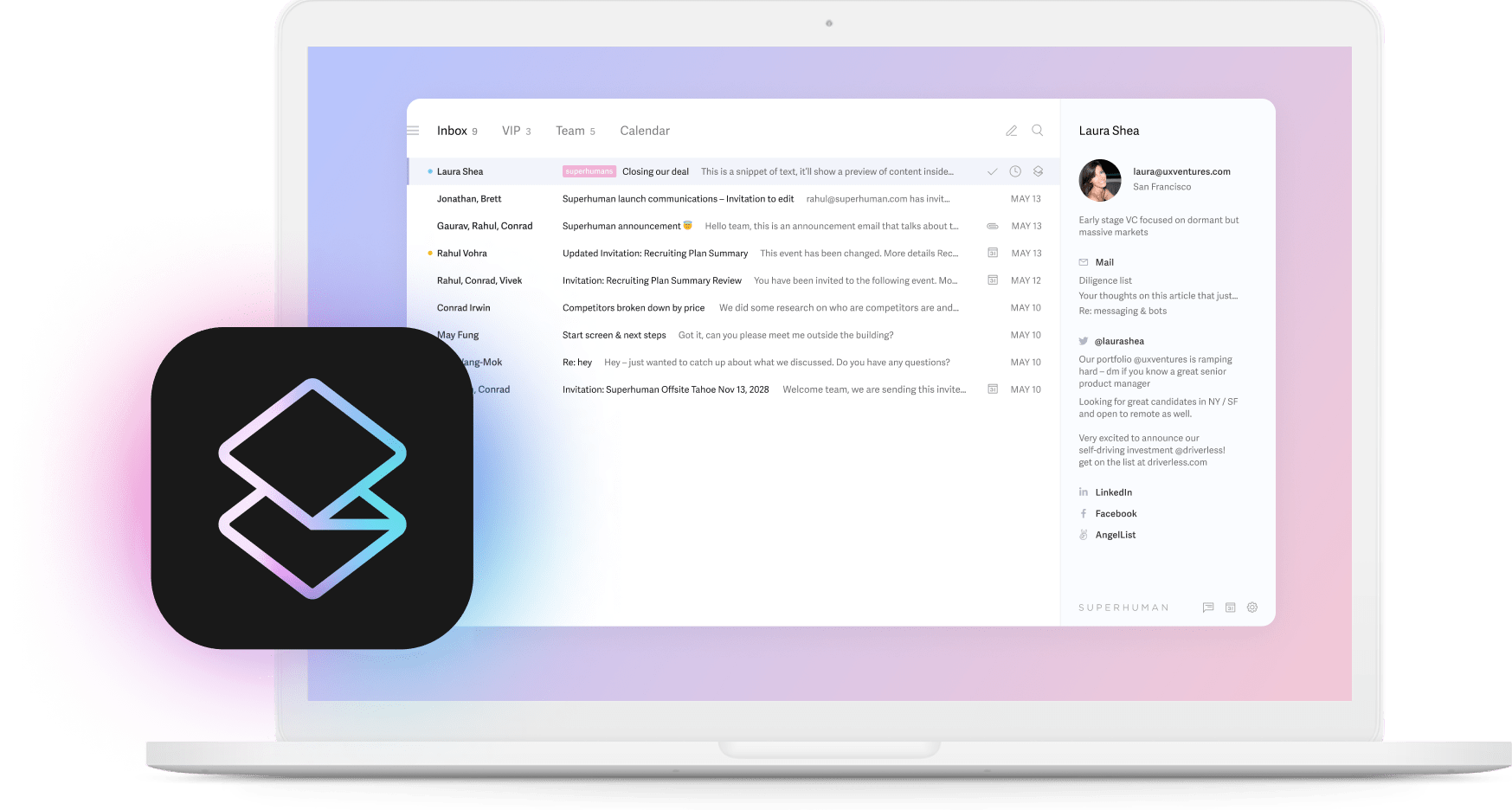
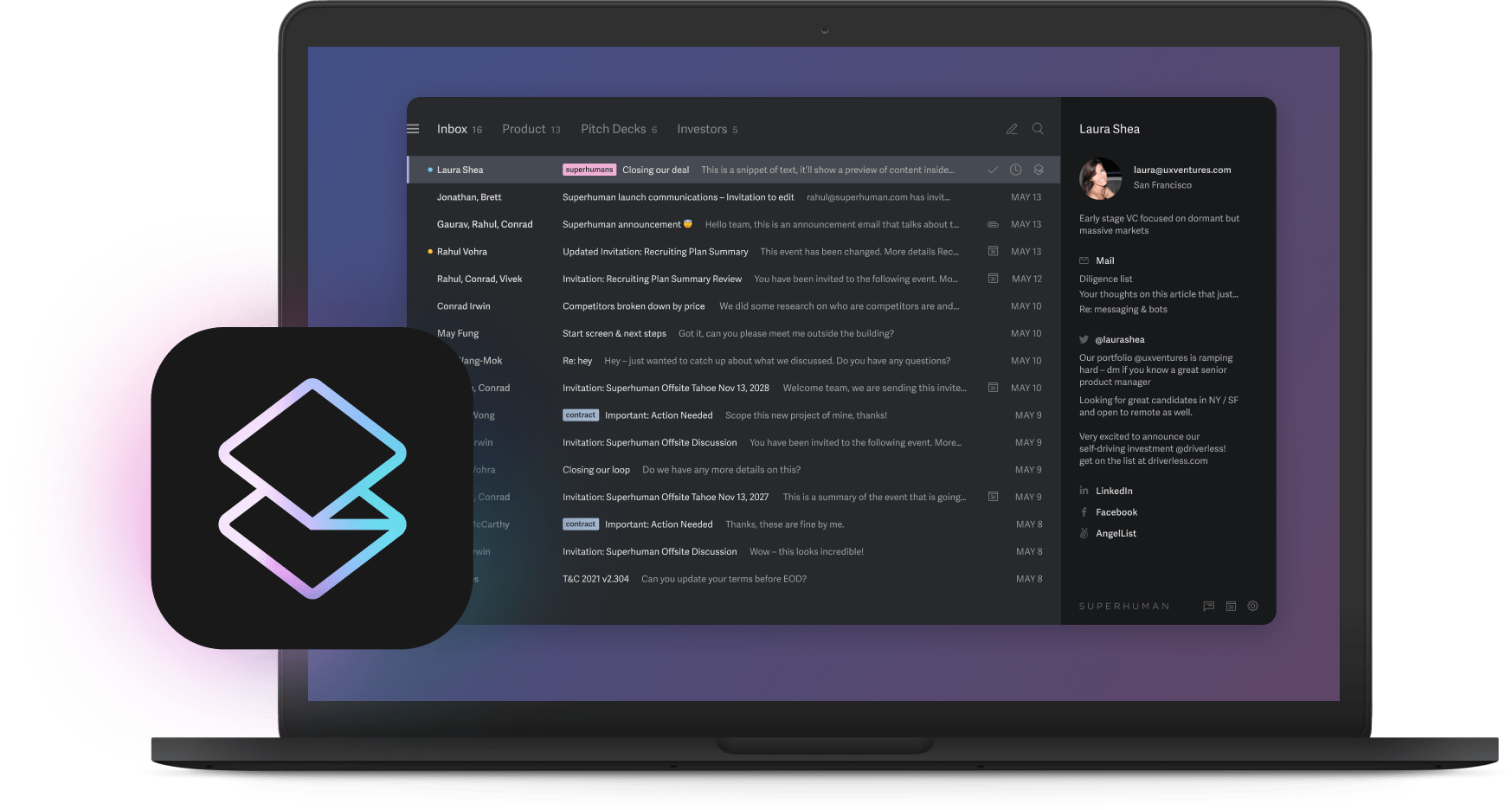
Picture opening your inbox and seeing your three most important emails already highlighted. Each one has AI-drafted responses ready. Lengthy threads are summarized in one line. You process 50 emails in the time it used to take to handle 10.
That's Superhuman Mail. Built for Gmail and Outlook customers who handle high email volume, it's designed around one principle: your inbox should work at the speed of thought.
Teams using Superhuman Mail save 4 hours per person every week. They respond 12 hours faster than competitors. They handle twice as many emails in the same amount of time.
Key features that matter:
- Superhuman AI learns your writing patterns and drafts complete emails from single lines, maintaining your authentic voice. No robotic responses, no endless editing to sound like yourself.
- Split Inbox automatically organizes messages by priority. Emails from colleagues, executives, and important tools like Google Docs or Asana get surfaced immediately.
- Instant Reply generates three contextual response options for every incoming email. Open your inbox and your replies are already drafted.
- Auto Summarize condenses lengthy conversations into single-line summaries that update in real-time. Catch up on a 47-email thread in seconds instead of minutes.
- Read Statuses show exactly when and on which device recipients read your emails, taking the guesswork out of follow-up timing.
- Over 100 keyboard shortcuts enable lightning-fast navigation without touching your mouse. Shared Conversations let teams collaborate on specific email threads without cluttering recipient lists or forwarding chains.
What works:
Speed isn't marketing speak. Every action happens in under 100 milliseconds. The interface responds faster than you can think, creating flow state instead of fighting friction.
AI features actually save time instead of requiring more work. Rather than generating generic templates you'll spend 10 minutes editing, Superhuman AI produces responses that sound like you wrote them.
Team collaboration features eliminate the "did anyone reply to this?" problem. Everyone sees what's happening without endless CC chains or Slack check-ins.
What to consider:
The $30/month price point positions Superhuman Mail as a premium solution. It's designed for professionals where saving 4 hours weekly justifies the investment. If you handle 50+ emails daily and your time is valuable, the ROI is clear.
Superhuman Mail works with Gmail and Outlook accounts. The platform's power comes from keyboard shortcuts and AI features that require some learning. Most customers fly through email within a week. The personalized onboarding call helps.
Pricing: $30 per month per person. Includes personalized 1:1 onboarding, unlimited AI features, and all collaboration tools.
Best for: Busy executives handling 200+ daily emails who need to maintain responsiveness without sacrificing strategic work time. Founders and leaders who view email as a competitive advantage. Teams that need to coordinate on client communications without drowning in forwarded threads.
For businesses using multiple productivity tools, Superhuman Mail integrates seamlessly across your workflow, similar to how Grammarly enhances writing quality or how Coda centralizes team documentation.
Google Workspace
Google Workspace dominates because it's everywhere. Gmail, Drive, Calendar, Docs, Sheets, Meet. If your team already lives in Google's ecosystem, Workspace is the natural choice.
The integration depth is unmatched. Compose an email, attach a file from Drive, schedule a meeting, share a Doc, all without leaving your inbox. The tools talk to each other because they're designed as one system.
What works: Ecosystem integration eliminates context switching. Familiarity reduces onboarding time—most professionals already know Gmail's interface. Scalability supports organizations from two-person startups to enterprises with thousands of employees. Administrative controls give IT teams granular visibility over email security and compliance.
What to consider: The interface hasn't fundamentally changed in years. AI features lag behind specialized productivity platforms. Smart Compose suggests basic phrases, but it won't draft entire responses or learn your communication patterns. Speed is adequate but not optimized.
Pricing: Business Starter at $6/month per person. Business Standard at $12/month. Business Plus at $18/month.
Best for: Teams already invested in Google's ecosystem who need reliable email and collaboration tools. Organizations prioritizing cost-effectiveness over specialized productivity features.
Titan Mail
Titan Mail targets small businesses and startups needing professional email without enterprise pricing. At $0.99 per month, it's the most affordable option for custom domain email.
What works: Price makes professional email accessible. Basic features cover essentials—custom domains, mobile apps, calendar integration, spam protection. Simple interface reduces learning curves.
What to consider: Limited productivity features mean you'll handle email manually. No AI assistance, minimal automation, basic organization tools. The integration ecosystem is sparse. Support options are basic.
Pricing: Starts at $0.99/month per person. Although pricing depends on the partner.
Best for: Startups and small businesses needing professional email addresses without budget for premium platforms. Teams with straightforward email needs and minimal collaboration requirements.
Zoho Mail
Zoho Mail positions itself as the privacy-focused alternative to major providers. No ads, no data mining, no scanning your emails for targeted marketing.
What works: Privacy protections appeal to businesses handling sensitive information. Ad-free interface eliminates distractions. HIPAA compliance options support healthcare organizations. Competitive pricing makes privacy accessible.
What to consider: Limited AI capabilities mean more manual work. The interface feels dated. The integration ecosystem is smaller—many third-party tools prioritize Gmail and Outlook connections.
Pricing: Free tier for up to 5 customers. Paid plans start at $1/month per person and scale to $3/month.
Best for: Privacy-conscious businesses prioritizing data protection over advanced features. Organizations operating in regulated industries requiring HIPAA compliance.
Proton Mail
Proton Mail takes privacy to the extreme. Zero-access encryption means even Proton can't read your emails. Servers located in Switzerland benefit from some of the world's strongest privacy laws.
What works: Maximum security protects the most sensitive communications. End-to-end encryption ensures only intended recipients can read messages. Swiss jurisdiction provides legal protection beyond what most countries offer.
What to consider: Encryption complexity creates friction. Minimal collaboration features reflect the platform's security focus. AI integration is essentially non-existent. Price premium for maximum security.
Pricing: Free tier available. Mail Plus starts at $4.99/month. Business plans begin at $6.99/month per person.
Best for: Journalists, lawyers, activists, and other professionals handling highly sensitive communications. Organizations in security-focused industries where email compromise could have severe consequences.
Fastmail
Fastmail focuses on speed, privacy, and standards compliance without the feature bloat of major platforms.
What works: Fast performance delivers emails and loads interfaces quickly. Privacy-focused approach respects your data without analyzing it for advertising. Independent operation means no corporate parent monetizing your data.
What to consider: Limited collaboration features. Minimal AI assistance. Interface is functional but not flashy.
Pricing: Basic at $3/month per person. Standard at $5/month. Professional at $9/month.
Best for: Power customers wanting fast, reliable email without paying for features they won't use. Privacy-conscious professionals who don't need maximum encryption but want data respect.
How to choose the right email business service
Your inbox is as unique as your business. A five-person startup has different needs than a 500-person enterprise.
Start with your actual workflow, not a comparison chart. How many emails does your team handle daily? Do you need to collaborate on client communications? Is email your primary customer communication channel or one tool among many?
Assess your team size and email volume
Solo entrepreneurs handling 50 daily emails have different needs than executive teams processing 300. Calculate your team's total email volume honestly. If your team collectively sends and receives thousands of messages daily, productivity features that save seconds per email create hours of weekly savings.
Determine priority features
Not every business needs every feature. Do you need AI-native drafting assistance or can you write every email manually? If you're sending similar messages repeatedly or drafting complex responses regularly, AI assistance saves significant time.
Is team collaboration on emails essential or occasional? If multiple people coordinate on client communications, features like Shared Conversations prevent duplicate work and communication mishaps.
How critical is response speed? For businesses where delayed responses lose deals, features like Read Statuses and automated prioritization become essential.
Security and compliance requirements
Some industries require specific compliance certifications. Healthcare organizations need HIPAA-compliant email. Financial services require robust audit trails. Match your provider's security features to your actual requirements.
Budget and ROI calculation
Free email isn't free if it costs your team 10 hours weekly in wasted time. Calculate real costs:
Time saved per person per week × hourly value × team size = weekly value created
If a platform saves 4 hours weekly per person and you have 10 team members earning $75/hour, that's $3,000 in weekly productivity gains. Against that, even $300/month in subscription costs delivers 40:1 ROI.
Best practices for business email management
Your inbox is as unique as your business. A five-person startup has different needs than a 500-person enterprise.
Start with your actual workflow, not a comparison chart. How many emails does your team handle daily? Do you need to collaborate on client communications? Is email your primary customer communication channel or one tool among many?
Set up custom domains properly
Choose a domain that represents your brand professionally. Configure DNS records correctly—your email provider will supply specific SPF, DKIM, and DMARC records. Copy them exactly. One typo breaks email delivery.
Security fundamentals
Enable two-factor authentication across all business email accounts immediately. Hardware security keys provide stronger protection than SMS-based 2FA. Implement strong password requirements: minimum 12 characters, mix of uppercase, lowercase, numbers, and symbols.
Run regular security audits reviewing access permissions, identifying inactive accounts, and ensuring settings align with current best practices.
SPF, DKIM, DMARC authentication setup
Email authentication protocols have become mandatory for reliable business email delivery. Major providers now require proper SPF, DKIM, and DMARC configuration for bulk sending.
SPF records specify which IP addresses can send email from your domain. DKIM adds cryptographic signatures to outgoing emails. DMARC policies tell recipients how to handle emails failing authentication. Start with monitoring mode, then gradually implement enforcement as you resolve authentication issues.
Recommended integrations
CRM integration transforms email from standalone communication into trackable relationship management. Platforms like Salesforce, HubSpot, and Pipedrive automatically log communications and trigger workflow automation.
Calendar integration eliminates scheduling friction. Advanced scheduling tools like Calendly embed directly into email signatures, enabling prospects to book meetings without back-and-forth exchanges.
Team collaboration tools like Slack or Microsoft Teams benefit from email integration that surfaces important messages in appropriate channels.
For teams managing complex projects alongside email, tools like Coda can centralize documentation and track deliverables, creating a unified workspace that reduces constant switching between platforms.
Migration tips
Email migration requires careful planning. Create comprehensive migration checklists covering data export, account setup, DNS changes, and rollback procedures. Test migration processes with small groups before full deployment.
Plan DNS changes during low-traffic periods. Provide training covering new interface navigation and productivity optimization techniques. Common pitfalls include insufficient backup verification and rushed implementation timelines.
Email business service: Your email advantage starts here
The right email platform doesn't just deliver messages. It transforms how your team communicates, collaborates, and competes.
You'll face tradeoffs. Privacy versus collaboration capabilities. Cost versus productivity gains. Simplicity versus advanced features. Choose based on specific organizational needs rather than lowest cost alone.
For organizations prioritizing maximum productivity and AI assistance, Superhuman Mail delivers measurable time savings that justify premium pricing. You'll save 4 hours per person every week and respond to twice as many emails in the same time. Teams invested in Google's ecosystem benefit from Workspace integration. Privacy-conscious organizations should consider Proton Mail's security-first approach. Budget-conscious businesses can achieve professional communication through Titan Mail or Zoho Mail.
Invest time in proper evaluation. Take advantage of trial periods. Prioritize solutions that enhance rather than complicate your team's workflow. Understanding your requirements and evaluating options against measurable criteria helps you select a platform that transforms email from necessary overhead into competitive advantage.