Making Go the most proactive AI assistant for work
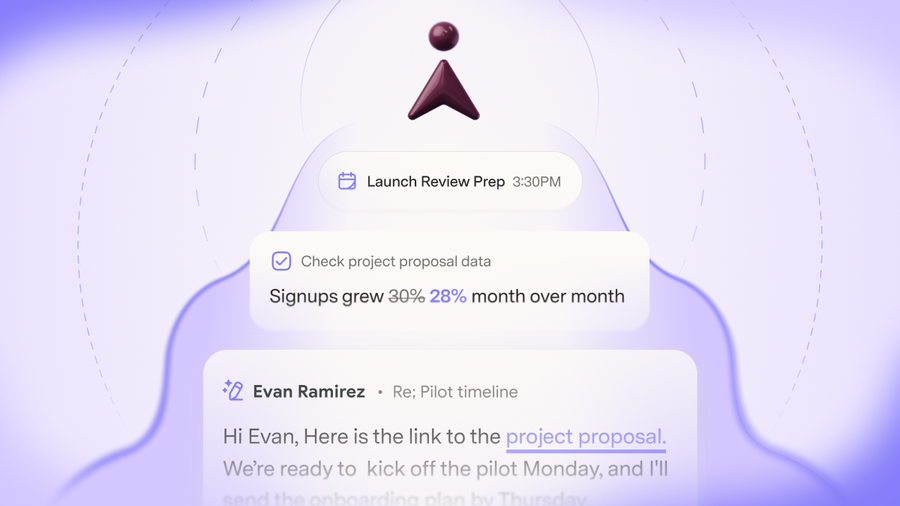

Yesterday, at our inaugural Superhuman Assembly, we introduced the next chapter of Go: the most proactive AI assistant for work. We’d like to share our vision and what’s coming over the next few months.
This evolution of Go will build on what makes Go great, combining it with the latest in proactive AI. Go will remain the AI assistant that works alongside you, but it will also start working ahead on your behalf.
We’re excited to get it into your hands and hear what you think.
What it means to be the most proactive assistant
2026 will be many things, but for us it’ll be the year when proactive AI went mainstream. If you wanted to make a proactive agent this time last year, you’d have to MacGyver scripts together in OpenClaw. Fast forward to today and we have a glut of proactive assistants at our service: Muse, Duet, Dots, Grok Bot, Instinct, Town, to name a few, all showing us how useful AI can be when it stops waiting for a prompt and starts reaching out when it has something useful. Agents can alert us when flight prices drop, when a free trial is about to end, or when it’s time to apply to summer camps for your kid.
That’s the promise: less to keep track of, without having to ask. But our experience with Go has taught us that delivering on this promise at work takes more than texting with an agent. It means knowing when to work ahead on your behalf and when to pitch in where you’re already working.
Over the past year, we’ve focused on the latter: building Go to work alongside you in real time. Go shows up at your cursor, in your window, and through underlines as you type. It connects to your company data and remembers how you work, so it can flag an off-message claim or suggest a correction based on the latest data. It doesn’t just work off to the side; it’s in the work with you.
Now we’re building on that foundation to help Go work ahead too, just like the latest generation of personal agents. Together, Go will be the only assistant that works for you, and with you. That’s what the most proactive assistant for work should look like.
Go in your day
In practice, here’s how Go might show up more proactively in your workday over the next few months.
Get to inbox zero
Go helps you stay on top of email. It can remind you to follow up, draft replies in your voice, collaborate on drafts, and catch errors before you hit send.
Make meetings count
Go helps you get ready for and close the loop on meetings. It watches your calendar, briefs you before a last-minute meeting, catches errors in a recap, and helps with scheduling.
Tackle your to-do list
Go helps you keep work moving across your apps. It can flag deadlines and take tasks off your plate, help wrap up a document, and even fact-check as you write.
What’s coming soon
Here’s what we’re rolling out over the next few months that makes this more proactive AI assistant a reality:
Go works ahead, with your approval. It looks across your connected tools, finds what needs your attention, and suggests what to do next. You decide what gets done, sent, or shared.
Go writes more like you over time. It learns from your writing, past replies, and work context to draft in your voice. It can also help edit as you write and keep adapting to your style.
Make Go your own. Give it a name, choose how it looks, and customize the agents on your team. Those agents can work inline, right where you’re writing.
New specialized agents, built with our partners. Over 20 new agents built with our partners—including Legora, Databricks, Amplitude, Saifr (Fidelity Labs), Blackboard, Apollo, Bitly, DeepL, and Gamma—will bring specialized help right into your existing workflows.
You’ll also start seeing Go across the Superhuman suite as it comes to Docs and Mail as the native assistant built into each product.
This builds on core features already helping people at work:
- Go runs on its own computer in the cloud, so you can hand off work and shut your computer while Go keeps working.
- Go connects to your important data sources, so you get help grounded in your work without hunting down context across apps.
- Go comes with pre-built specialist agents, like Knowledge Checker, Email Assistant, and Grammarly, as well as partner agents, so you can get specialized help without building anything yourself.
- Go works alongside you in real time, so you can improve your work without breaking your flow. Agents underline text that needs your attention. Go’s always available at your cursor: highlight any text to see suggested actions, from summarizing a long doc to rewriting a tricky sentence, explaining dense text, or translating on the fly.
- Anyone can build custom agents that show up everywhere to automate repetitive work. Decide the trigger that makes your agent run—a schedule, an event, or just anytime you start typing—and what apps it should pull data from. You can use our easy no-code agent builder, or just ask Go to spin up an agent for you.
Go started as a platform for bringing agents into your workflow, and now I’m so excited to see it becoming the most proactive assistant for work, backed by a team of specialist agents.
We’ll roll these features out over time, primarily through our paid plans. Join the early access program to try them sooner and share feedback directly with our product team. We’re building Go with the people who use it, so we’re excited to hear what you think.