
Key takeaways
- Unified workflow saves hours: Integrating email, calendar, and tasks into one system eliminates context switching that costs up to 40% of productive time
- Batch processing beats constant checking: Check email 3-4 times daily and process in dedicated 30-60 minute blocks
- AI tools compound time savings: Intelligent prioritization, automated scheduling, and AI-generated responses can save significant time. For example, Superhuman Mail can save 4 hours every week.
- Accountability features prevent dropped balls: Read receipts, follow-up reminders, and snooze functionality ensure nothing falls through the cracks
You're treating email, calendar, and tasks as separate systems. They're not. Effective email calendar task management recognizes that these tools are fundamentally interconnected. When you integrate them properly, you reclaim 3-5 hours daily by eliminating the focus cost of constant application switching.
Every jump between applications costs you mental energy and productive time. This article shows you how to unify these workflows, process messages faster, protect your focus time, and ensure nothing falls through the cracks.
Understanding email calendar task management
You start your day at 6 AM, checking email. By 9 AM, you've processed 40 messages but accomplished nothing meaningful. Your calendar is fragmented with 30-minute gaps. Your task list lives somewhere between your inbox, a notes app, and your memory. You're drowning in daily email volume, spending 2.6 hours managing your inbox.
Every time you jump from your inbox to check your calendar, then to your task list, then back to email, you lose focus. Context switching can cost 40% of your productive time. Your focus never fully resets before the next interruption, leaving behind context switch residue.
Why the hyperactive hive mind destroys productivity
Interruptions slow down work, delay responses to critical events, and increase errors. High email demands specifically hinder leaders' effectiveness by creating constant urgency pressure.
Your organization needs new communication protocols. Establish protocols defining when to use email versus instant messaging, project management systems, or meetings. Set response time expectations so your team isn't constantly checking if you've seen their message.
But here's the thing: even with perfect organizational protocols, you still need the right tools to manage your personal workflow.
How separate systems multiply your mental load
Right now, you're juggling three separate systems:
- Gmail for messages: scanning, replying, organizing
- Google Calendar for meetings: checking availability, scheduling, rescheduling
- Asana for tasks: tracking action items, deadlines, follow-ups
Each switch between them costs you mental energy.
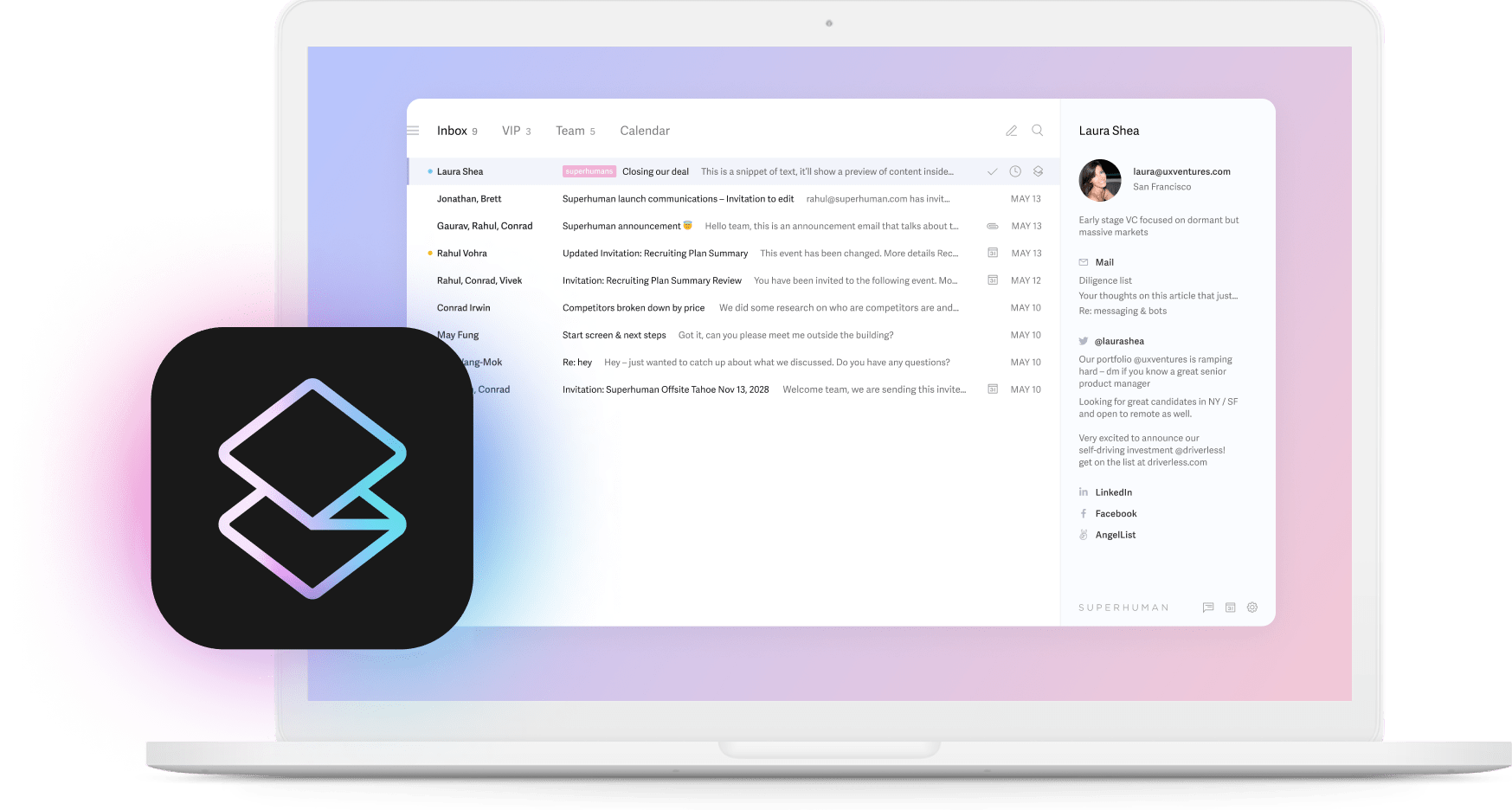
Tools like Superhuman Mail make email feel good again by unifying this workflow. You see all your calendars at once, both Google and Outlook. When someone emails requesting a meeting, you instantly see your availability without switching apps. You can find time with teammates, share your availability, and create events directly from your inbox, with the platform automatically extracting title, description, location, attendees, and suggested times.
Busy professionals benefit from seeing calendar and task information in one place. For executives managing VIP relationships, you can ignore internal meeting conflicts so external commitments never get blocked by internal meetings.
3 email calendar task management practices that work
Leaders managing 200+ emails daily improve performance with three specific strategies: using the email client as a to-do list, keeping the inbox at zero to reduce mental clutter, and applying strategies that match how you work.
1.Separate checking from processing
Think about email in two modes: checking and processing.
Checking means quick 2-5 minute scans to identify urgent messages and flag items requiring responses. Processing means dedicated blocks for thoughtful responses, addressing all flagged messages.
Check your inbox 3-4 times daily. Process during scheduled 30-60 minute blocks. This eliminates constant context switching while maintaining responsiveness.
Sound familiar? As we mentioned above, checking inboxes every few minutes creates context switch residue where your focus never fully resets before the next interruption.
2.Time block your email and calendar workflow
Time blocking assigns every minute of your workday to specific activities. For leaders processing 200+ emails daily, this includes:
- 3-4 email processing blocks of 30-60 minutes each
- Dedicated blocks for shallow work, like administrative tasks
- Protected time for deep work free from email interruption
Your calendar becomes your commitment to yourself about how you'll spend your time. Schedule shallow work like administrative tasks in dedicated blocks. Protect deep work blocks from email interruption entirely.
Leaders who implement time blocking with protected morning deep work sessions and scheduled email processing windows can become up to twice as efficient as those using conventional planning methods.
Your calendar should contain only time-specific commitments. Your task system holds all other actionable items. When you're deferring emails, create both a task entry and schedule specific processing time on your calendar. This separation prevents calendar bloat and keeps your schedule clear for executives managing complex stakeholder relationships.
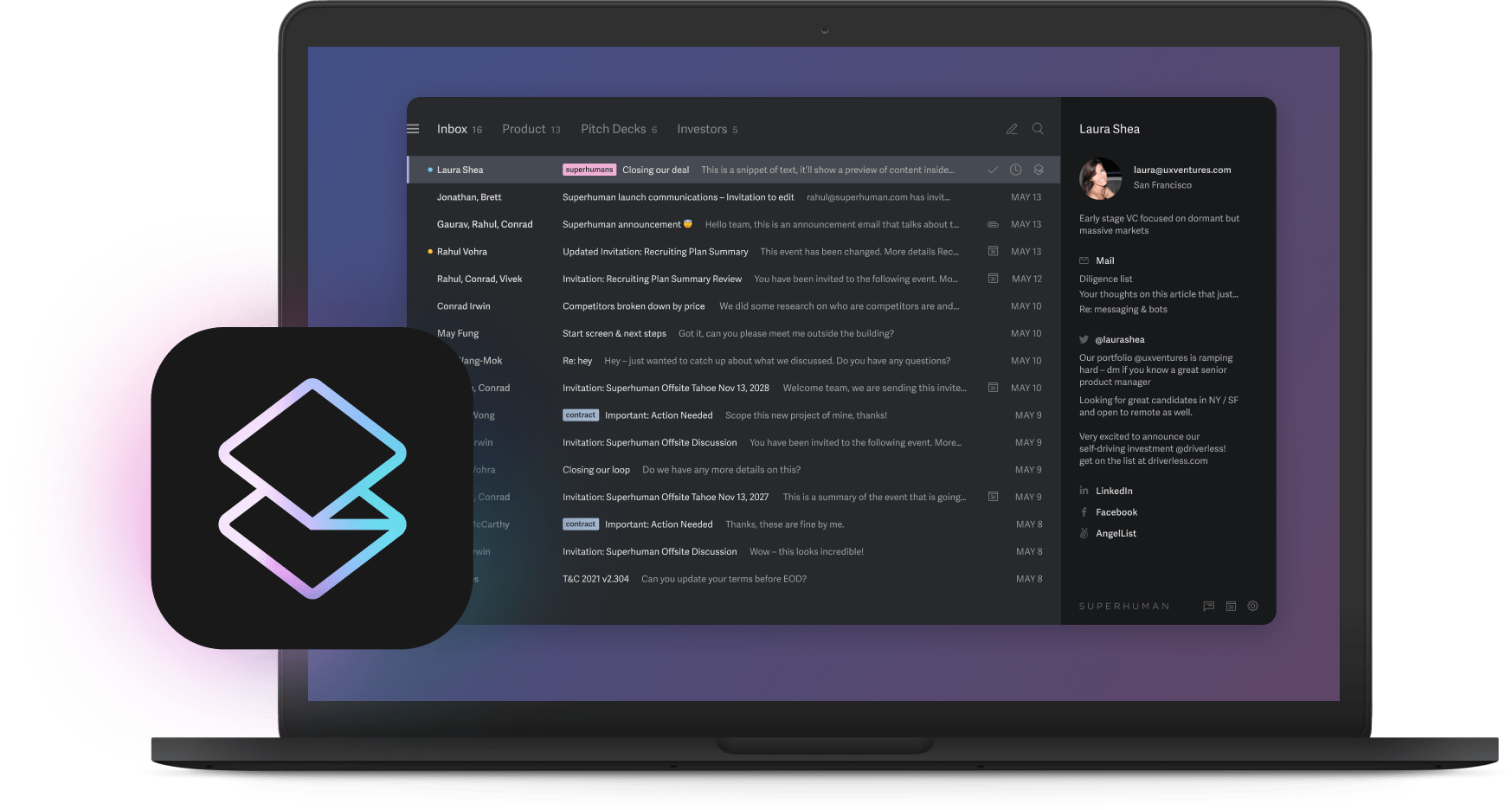
Superhuman Mail's Split Inbox feature automatically separates your email into distinct streams, reducing decision fatigue during processing blocks. You can batch similar types of messages together, handling all internal requests in one session and client communications in another.
3.Use your inbox as a task list
Using your email client as a to-do list increases email management performance, but only when emails are processed deliberately. The key? Apply a framework that addresses each message with a specific action: delete, delegate, defer to a scheduled time, handle immediately, or organize for tracking.
When you defer an email, schedule a specific time to address it and remove it from your inbox until then. Don't leave it sitting there, creating visual noise and decision fatigue.
Superhuman Mail's inbox zero methodology processes every email through four actions: delete, delegate, do for tasks under 2 minutes, or defer by scheduling time to handle it later. This framework ensures you either remove emails from the inbox or process them at a scheduled time, rather than leaving them lingering indefinitely.
How AI-powered email calendar task management saves 3-5 hours daily
Your competitors are already using AI to save hours every day. In fact, 75% of knowledge workers now use generative AI. They're using it because it delivers measurable benefits to their workflows and productivity.
Superhuman Mail's AI-native design saves you time in three specific ways that compound throughout your day:
- Intelligent prioritization analyzes incoming messages and eliminates approximately 30-45 minutes daily of manual inbox organization. Your most important emails surface automatically, so you're not wasting mental energy deciding what matters.
- Automated meeting scheduling simplifies coordination. AI scheduling assistants eliminate the tedious back-and-forth of coordinating meeting times, what many call "email tennis." Schedule that board presentation with three executives in different time zones? Done in seconds, not twenty back-and-forth emails.
- AI-generated responses save 2-3 minutes per reply when used for composition acceleration. That translates to 60-150 minutes saved on email composition alone for high-volume users. Responding to routine status requests, confirming meeting attendance, or acknowledging receipt of documents no longer drains your focus.
Superhuman Mail's AI analyzes messages you've sent to specific recipients and matches your tone and voice. It learns over time from your writing. You can handle complex requests with natural language: "find time with alex after I land in SFO" or "schedule a 30 min chat with sarah and draft a welcome email." It then automatically extracts all necessary details and creates the calendar event, stress-free.
The keyboard-first workflow multiplier
You probably use your mouse dozens of times while processing email. Navigate to an email. Click it. Click reply. Click send. Move to the next email.
Each click breaks your rhythm. Each mouse movement pulls your hand away from the keyboard. Multiply these interruptions across roughly 120 emails daily, and you're spending significant time on navigation alone.
Superhuman Mail's keyboard-driven navigation lets you fly through your inbox using shortcuts for every action. Navigate with J and K. Mark messages done with E. Snooze with H. Reply with R. All without breaking your flow.
This creates a rapid processing rhythm that eliminates the mental drain of mouse navigation during email batching sessions. Your hands stay on the keyboard, creating a fluid workflow that feels effortless.
This is why Superhuman Mail is the most productive email app ever made. Superhuman Mail can help you save 4 hours every single week and process email twice as fast. When you're managing board communications, coordinating cross-functional projects, and maintaining client relationships, that time compounds quickly.
Accountability features for integrated task management
Read receipts, follow-up reminders, and snooze features work together to create an accountability framework that prevents important communications from falling through the cracks.
Read receipts provide verification that recipients opened and reviewed your emails, allowing you to distinguish between non-receipt and deprioritization. If someone hasn't opened your email about the board presentation, you send a different message than if they opened it three times but haven't responded.
Follow-up reminder systems create automatic prompts for unresolved items. Follow-ups without context lead to poor engagement. These features address this by preserving context across multiple touchpoints, enabling more effective follow-ups.
Superhuman Mail helps you follow up on time, every time. The platform tracks conversations through its Split Inbox system and deferred email scheduling, allowing you to process emails deliberately and ensure nothing falls through the cracks.
Snooze functionality helps prevent important tasks from slipping through cracks by allowing you to defer emails and ensure they reappear in your inbox at the optimal time for action. This prevents the mental burden of maintaining lists of deferred items while enabling deep work on current priorities.
Your email calendar task management implementation roadmap
You can't adopt all these practices overnight. Here's a phased approach.
Weeks 1-4: Foundation and optimization
Apply the Getting Things Done (GTD) methodology as your primary system. Configure folder and label structure. Block 3-4 email processing sessions (30-60 min each). Create 3-5 email templates for common scenarios. Integrate calendar systems for deadline tracking.
Weeks 5-8: Refinement
Measure email processing time and adjust batching intervals. Track metrics: inbox zero achievement rate, average response time per message. Refine AI response templates based on usage patterns. Optimize Split Inbox categories for your specific workflow patterns. Implement advanced filtering based on sender and subject patterns.
During implementation, you'll discover patterns specific to your role. The CFO processing quarterly reporting requests needs different filters than the VP of Sales coordinating client relationships. The key is starting with these proven practices and adapting them as you identify your highest-volume email categories.
Make email feel good again
Email doesn't have to control your day. With integrated email calendar task management, you can process emails more efficiently while reclaiming hours through reduced context switching. The key is treating these three systems as one unified workflow.
Stop jumping between applications. Stop letting email anxiety interrupt your deep work. Get started with Superhuman Mail and transform your workflow from reactive to proactive.
FAQs
What is email calendar task management?
Email calendar task management is the practice of integrating your email inbox, calendar, and task list into a unified workflow. Instead of treating these as separate systems, you manage them together to reduce context switching, improve productivity, and ensure nothing falls through the cracks.
How much time can I save with integrated email calendar task management?
Executives who implement integrated email, calendar, and task management can significantly boost productivity. This comes from eliminating context switching (which can cost up to 40% of productive time), using AI for prioritization and responses, and processing email in focused batches rather than constantly checking.
What's the best way to manage email, calendar, and tasks together?
The most effective approach combines three practices: separating email checking from processing, time blocking your calendar for dedicated email sessions, and using your inbox as a task list with a clear framework (delete, delegate, defer, or do). Tools like Superhuman Mail unify these workflows in a single interface.
How do I stop email from taking over my calendar?
Keep your calendar for time-specific commitments only and use your task system for all other actionable items. When deferring emails, create both a task entry and schedule specific processing time. This separation prevents calendar bloat and maintains clear boundaries between meetings and email work.
Can AI help with email calendar task management?
AI-powered tools can save significant time through intelligent prioritization, automated meeting scheduling (eliminating back-and-forth emails), and AI-generated responses. According to an MIT study cited by Harvard Business Review, generative AI helps people write emails and other content 40% faster.