The Learning-Visibility Loop: How AI Should Participate in Education
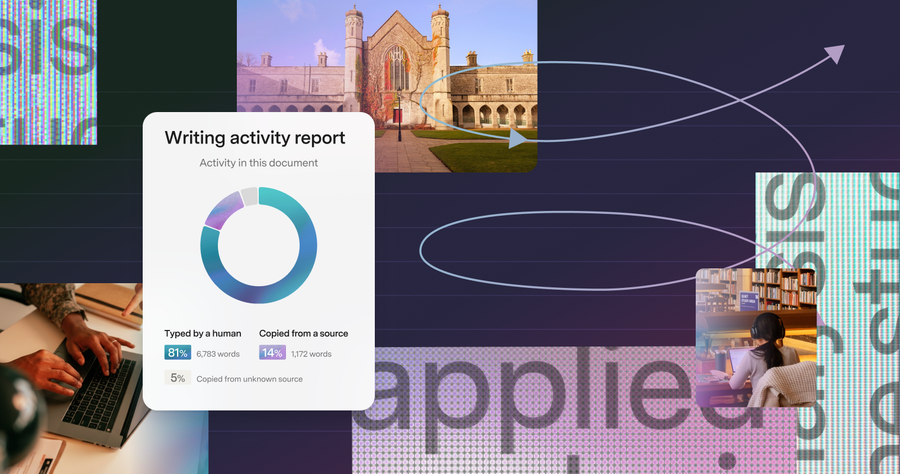
Superhuman’s point of view on the ethical use of AI in higher education: the learning-visibility loop, a model that makes student learning visible to faculty.
Generic AI is built to hand over answers. The bigger opportunity in education is to make the learning itself visible, for students and for the instructors teaching them.
A finished assignment doesn’t show how it was made. It shows what a student turned in, but not how they read the prompt, where they got stuck, which misconceptions surfaced, or what finally helped them move forward. Those moments are where learning actually happens, and they disappear the moment the work is submitted.
AI has widened that gap. The process is even harder to see now, and students, reaching for whatever tool is closest, get generic help that was never built for learning. Retention, integrity, and faculty workload were already compounding pressures on academic leaders. AI is adding to the pressure.
Why AI in higher education makes learning harder to see clearly
The instinct for many in education is to ask whether students used AI. We think the more useful question is, “Can educators tell that students are learning?” Visibility has become a greater challenge since the introduction of AI in education; instructors see the final submission but not the work that led up to it. The learning process itself has become opaque, even to the people responsible for teaching it.
A loop that makes learning visible
There’s a better way to work when AI is in the mix, one that turns that lost process back into something an instructor can see and act on. We call it the learning-visibility loop. Each turn of a student’s work informs the instructor’s next move, and each move shapes stronger work, so every round leaves both sides further along than the last. Here’s how it comes together.
A student works through a problem with an AI agent, a tool that holds a back-and-forth and works alongside them, guiding them rather than handing over the answer. That interaction leaves an honest record of how the student got there. The instructor reads that record, sees where the class is getting stuck, and shapes the next assignment around it. The student works again, now on ground the last round helped shape.
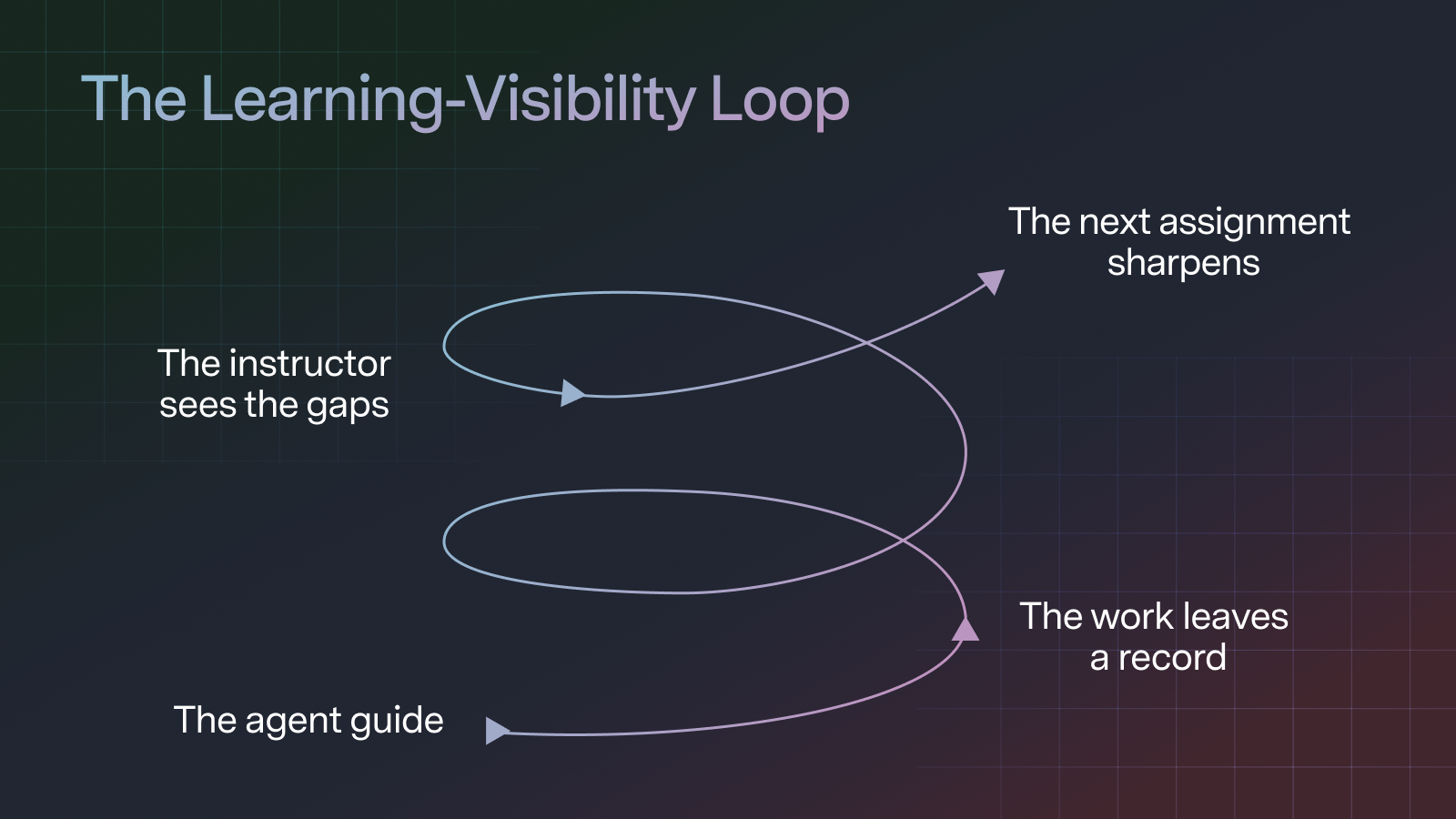
Each turn feeds the next. Instead of ending with a single graded assignment, every round gives an instructor something to act on, and every new assignment is shaped by what students actually struggled with. The loop moves teaching from what happened to what to do next.
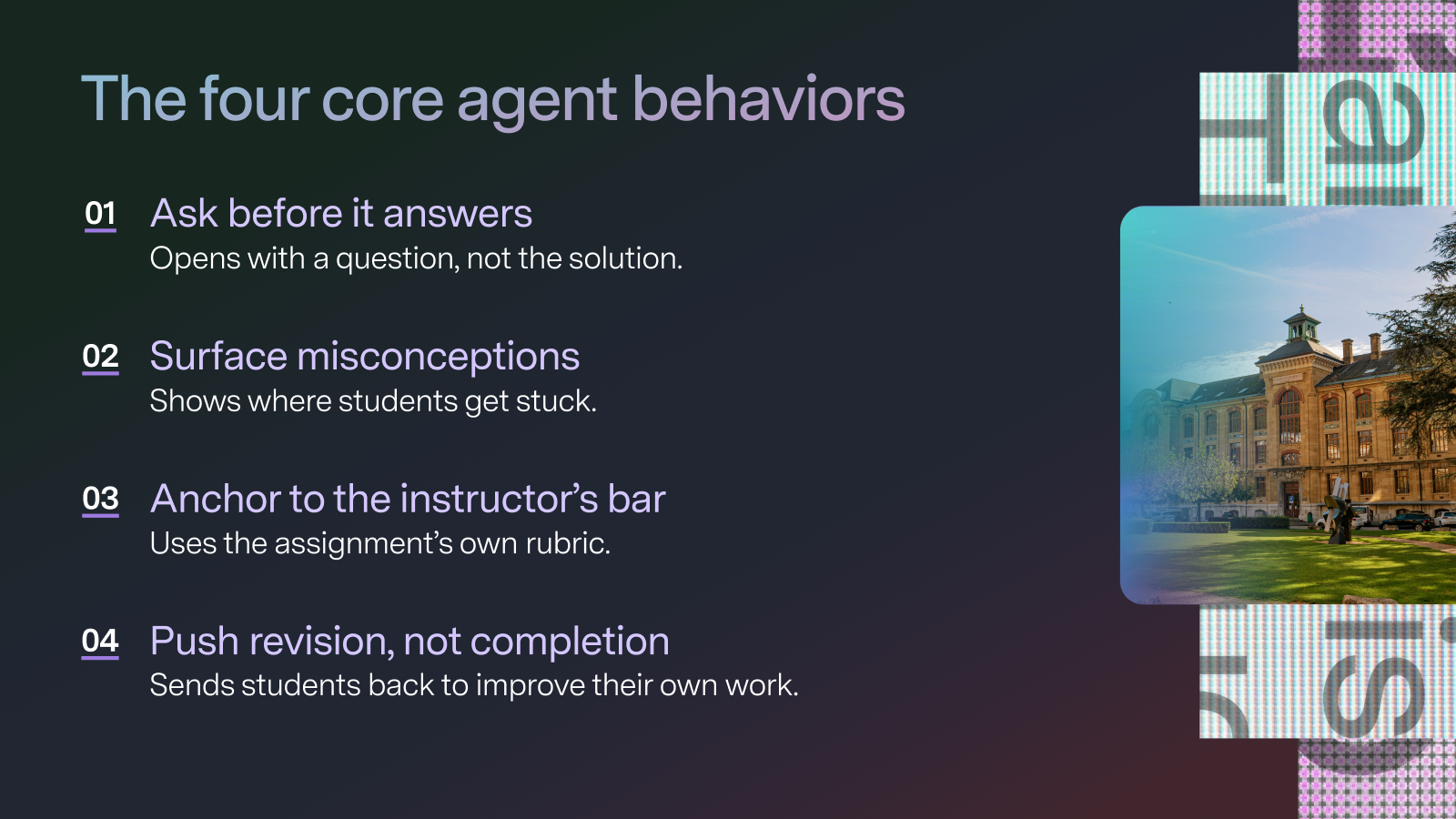
One design choice holds the whole thing together: The agent guides the student rather than generating the work. An agent that hands over answers leaves no record of how the student got there. An agent that asks questions and pushes for revision creates that record, because the back-and-forth is itself the trace of how the student worked through the problem. That is what makes the help genuinely educational, and it keeps the instructor’s signal honest. The two sides are one system, and each makes the other stronger.
What faculty told us
The loop is informed by first-party research led by Yolanda Wiggins, a senior researcher at Superhuman: 12 in-depth interviews with US higher education professionals, from professors and adjuncts to academic and technology leaders. The findings are qualitative and directional. The student side draws on separate, prior research with students.
Two things came through clearly.
1. Faculty want to see how learning happens
Again and again, instructors said they wanted to understand where students were struggling and what they could do differently as teachers.
“We have no idea what prompts they used. Most of this is very opaque to me.”
— a CIO who also teaches graduate courses
“We need to know what’s in their heads, not what AI can write.”
— an MBA program director
“You’re gonna have to give me all of your prompts, and show me the dialogue.”
— a social-psychology professor
Some instructors are already rebuilding this visibility by hand, redesigning assignments at real cost to their time. That effort is the clearest sign of the gap.
2. Students want to show their work
This second finding comes from separate, prior qualitative research with undergraduate and graduate students, who documented their real coursework and tool use. Students reached for AI when they were stuck, to interpret a prompt, get started, or check their work, not to do the assignment for them, and they valued tools that supported their thinking while keeping the work their own. Many are already opting into Grammarly Authorship, which documents how a piece of writing actually came together. The desire for greater visibility runs in both directions.
“You can’t just outsource your homework to AI. You can tell, it just creates AI slop. When students instead use it as a tutor or study buddy, we see much better work.”
— an MIS professor
What keeps the loop honest
The loop only works if a few things stay true.
First, humans do the work and own the decisions. Students remain the authors of their own learning, so the agent guides while the thinking and the work stay theirs. Instructors stay the decision-makers, so insight informs a teaching decision without ever making one. As one MBA program director put it, “I will never use AI to grade.” We design for exactly that: the instructor stays the decision-maker, and the tools inform decisions rather than make them.
Second, the student-side agent must be built to support learning. When it’s built well, it does four things:
Third, the instructor-side report has to lead with what to do next. It answers three questions a busy instructor rarely has time to answer alone:
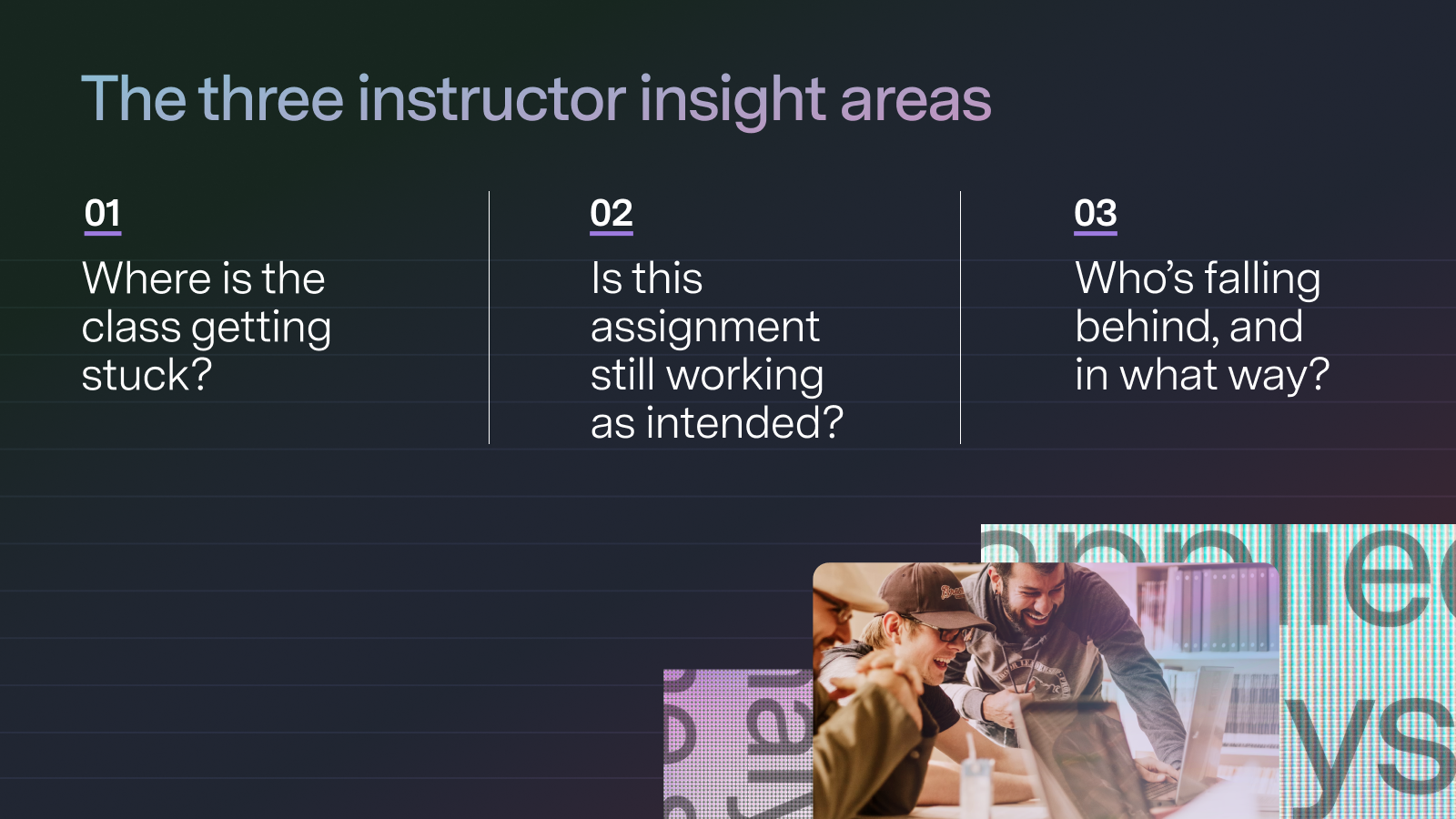
The point is to turn otherwise invisible patterns into a teaching decision, while grading, intervention, and course design remain firmly in human hands. Imagine a report that shows most of the class opened with a one-sided thesis, and that once the agent pushed back, the majority revised toward a stronger argument while a smaller group stayed stuck. That gap is the signal, and it points to exactly what to teach next.
What the loop collects, and what it leaves alone
Because the loop is based on how students learn, it collects only what helps teaching: the work process and class-level patterns, not personal or non-academic data. Students should know what’s captured, see what’s inferred, and be able to contest it. And the institution should stay in control of its own data.
Why higher education needs AI built for learning
Generic AI is getting very good at generating answers. Education needs something different: learning support that leaves an instructor with something to teach. That’s a fundamentally different product problem, and general-purpose assistants weren’t designed to solve it.
This is what it looks like when AI is built for education rather than pointed at it. It keeps students doing the doing, gives faculty a path forward instead of more to police, and gives institutions something they can actually measure: whether learning is happening. It complements an institution’s approach to AI rather than competing with it. And it’s built the way the best campus AI is being built right now: with institutions, not just for them.
Keeping learning visible
When an answer is always a click away, the work worth protecting is the learning. The learning-visibility loop is how we think AI can protect it: by keeping students in the work, keeping instructors in the decisions, and making the learning itself visible to both.
This is the model we’re building toward with Superhuman Go, alongside the institutions putting it into practice. The best campus AI isn’t handed down from a vendor; it’s shaped by the educators who know what learning should look like and built on a foundation higher ed already trusts.